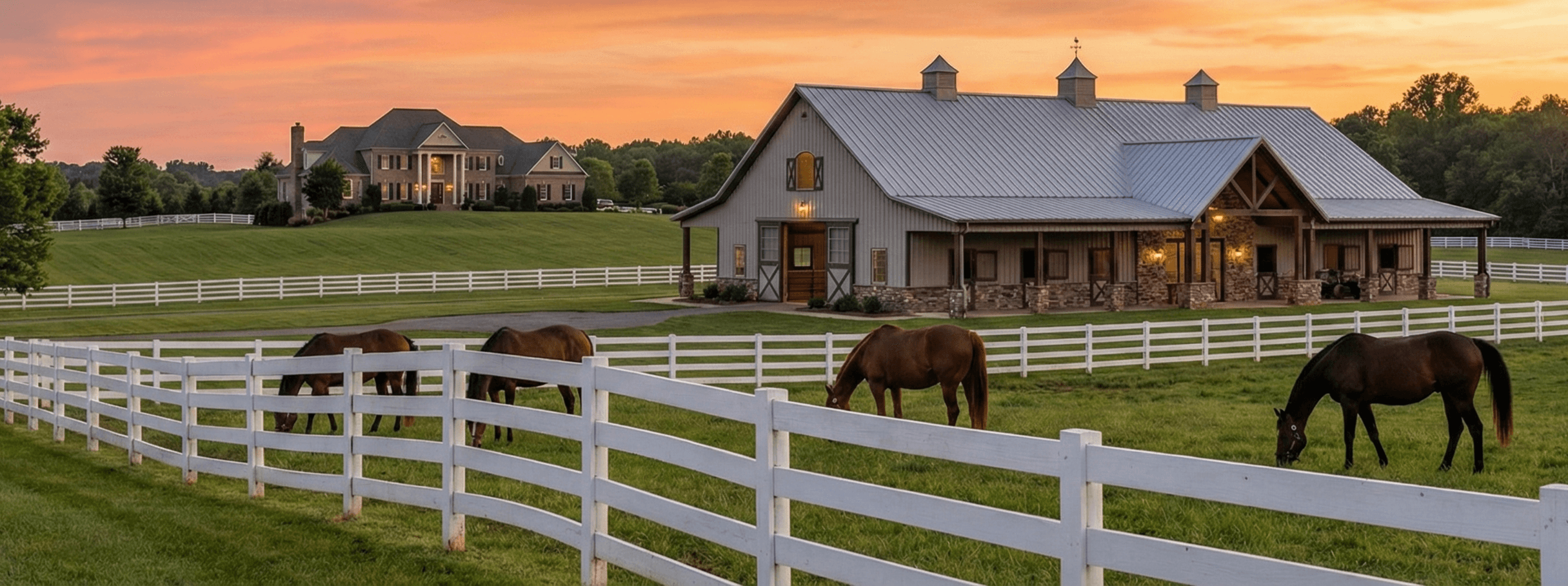
Carolina Horse Farm Realty specializes in luxury horse farms and equestrian estates across the Charlotte Metro area, helping buyers navigate the unique requirements of land, barn design, and pasture management.
The 2026 Charlotte equestrian real estate market has arrived with a distinct shift in tempo. While the broader residential sector in North Carolina has moved toward a more balanced state, the niche for horse farms for sale remains one of the most competitive and inventory-constrained segments in the region. For the first-time equestrian buyer, this requires more than just a pre-approval letter: it requires a deep understanding of soil types, zoning regulations, and the long-term value of turnkey infrastructure.
Whether you are looking for a few acres in Waxhaw or a premier training facility near Lake Norman, mastering this market means thinking like a horse person first and an investor second.
The 2026 Market by the Numbers
To understand where the market is going, we must look at the data driving today’s equestrian transactions. In the Charlotte Metro area, the value of land with horse potential is outperforming standard suburban lots.
- 3.2% Annual Appreciation: While standard residential growth has moderated, equestrian estates in desirable corridors like Union County have seen a steady 3.2% rise in value year-over-year.
- 42% Inventory Scarcity: True turnkey equestrian properties in Charlotte, NC, with functional barns and all-weather arenas, are currently 42% lower in supply compared to 2024 levels.
- 15+ Miles: The "Commute Gap" has widened; buyers are now looking at least 15 miles further out from Uptown Charlotte to find parcels exceeding 10 acres that meet modern drainage standards.
- $75,000+ Premium: High-quality "horse-ready" infrastructure (fencing, well-maintained pastures, and sheds) adds a significant premium to property values over raw land.
Navigate the Inventory Scarcity: Turnkey vs. Raw Land
In the current market, the primary dilemma for beginners is whether to buy a "ready-to-ride" estate or build from the ground up.
The Turnkey Advantage
Buying a property that already features a barn, established pastures, and perimeter fencing is the most efficient path to equestrian ownership in 2026. However, "turnkey" in the Charlotte market is often used loosely. Our team emphasizes that a true equestrian estate must have more than just a stable; it must have functional drainage and safe footing. Properties with existing arenas often sell 30% faster than those without, as the cost of grading and footing materials has risen significantly.
The Raw Land Challenge
If you choose to purchase raw land, particularly in areas like Waxhaw or Weddington, your due diligence must include a "perc test" for both the home and the potential barn site. Many buyers overlook that North Carolina’s red clay requires specific management to prevent mud-fever and pasture degradation. Using a horse farm cost calculator is essential before making an offer on land to ensure your budget accounts for the "hidden" costs of land clearing and pasture establishment.
Hyper-Local Spotlight: Where to Plant Your Stakes
The Charlotte Metro area offers distinct equestrian "vibes" depending on your discipline and lifestyle preferences.
Waxhaw and Union County: The Heartland
Waxhaw remains the epicenter of Charlotte equestrian life. Communities like Valley Farms offer the "mini-farm" lifestyle, where 3-to-10-acre parcels allow for private barns while maintaining a neighborhood feel. If you are searching for a sense of community without the commute, this area provides the best balance of local tack shops, veterinarians, and farrier routes.
Davidson and Lake Norman: The Agrihood Shift
Further north, the rise of the "Agrihood" has changed the landscape. Summit Farms in Davidson is a prime example of luxury low-density living. While not a traditional equestrian subdivision with a community barn on every corner, it appeals to the lifestyle buyer who values open space, sustainable farming, and proximity to the amenities of Lake Norman. For those who want the "farm feel" with less daily manure management, these agrihoods are a top choice in 2026.
Southwest Charlotte: Lake Living Meets Riding
In the Steele Creek and Lake Wylie area, communities like Chapel Cove offer a unique hybrid. While you won't find 10-acre pastures within the gates of Chapel Cove, residents enjoy a resort-style lake lifestyle with the Palisades Equestrian Center just minutes away. This is the ideal solution for the beginner equestrian who wants professional boarding and lessons without the 24/7 responsibility of farm maintenance.
Understanding the Unique Requirements of Horse Properties
As your trusted partners, we don't just look at the granite countertops; we look at the barn's ventilation and the pasture's forage quality. Here is what we prioritize for our clients:
Zoning and Acreage Limits
Not every piece of land in North Carolina is horse-friendly. Each municipality has specific requirements regarding the number of horses per acre: often starting at a minimum of 2 acres for the first horse and 1 acre for each additional animal. We help you navigate these local ordinances to ensure your dream of a four-horse stable doesn't get halted by a zoning board.
Pasture Management and Soil Health
The health of your horse starts with the ground they stand on. In the Charlotte Metro, we deal with heavy clay soils that can be unforgiving during our wet winters. We look for properties with high ground for barn placement and established fescue pastures that can handle grazing pressure.
Positioning Your Brand as an NC Authority
At Carolina Horse Farm Realty, we believe that selling a horse farm requires a different skill set than selling a suburban bungalow. You aren't just selling a house; you are selling a lifestyle, a facility, and a piece of land that has been nurtured.
"Our transition from a standard residential home to a 15-acre estate in Union County would have been impossible without a team that understood barn layouts. They caught issues with the arena drainage that three other inspectors missed."
: The Montgomery Family, Waxhaw Estate Owners
"Most Realtors talk about square footage. Carolina Horse Farm Realty talked about stall size and turnout rotations. They are horse people through and through."
: Sarah J., Dressage Trainer & Facility Owner
Mastering the 2026 Journey: Your Next Steps
The 2026 market demands decisiveness backed by data. If you are a beginner looking to enter the world of Charlotte equestrian estates, your journey should follow a structured path:
- Define Your Discipline: Are you looking for a casual trail-riding home or a professional-grade dressage facility? This dictates your soil and arena requirements.
- Calculate the Real Costs: Use our resources to understand the monthly overhead of farm ownership, from hay storage to fence repair.
- Walk the Land: Never buy an equestrian property without walking the perimeter. Look for low spots, invasive plants, and neighbor proximity.
The Charlotte Metro area remains one of the most vibrant equestrian hubs in the Southeast. From the scenic trails of Union County to the luxury facilities of Mint Hill, your perfect property is out there: but it requires an expert eye to find.
Ready to find your North Carolina sanctuary? View our latest horse properties for sale or contact our team for a personalized consultation on the Charlotte market.