The real secret about high-end stable design isn't about copper cupolas or custom stall fronts. It's about the unglamorous measurements that separate a showpiece barn from a functional facility: and most equestrian properties in the Charlotte area get these fundamentals wrong.
After years of walking through barns across Waxhaw, Weddington, and Tryon, I've noticed a pattern: the most expensive stables aren't always the best designed for actual horses. Builders focused on aesthetics often overlook the critical dimensions that impact respiratory health, behavioral wellness, and long-term maintenance costs. The difference between a 12-foot aisle and a 14-foot aisle might sound trivial until you've dealt with a anxious mare in cross-ties while someone tries to wheel a muck cart past.
Let's talk about what actually matters when you're designing or evaluating a high-end stable in North Carolina.
The Aisle Width That Changes Everything
Standard barn construction in our region defaults to 12-foot aisleways. It's cheaper to build, fits neatly into modular designs, and looks perfectly adequate when the barn is empty. But watch what happens during evening feed time at a busy boarding facility.
Expert recommendation: 14-foot minimum aisle width for private barns, 16 feet for commercial operations.
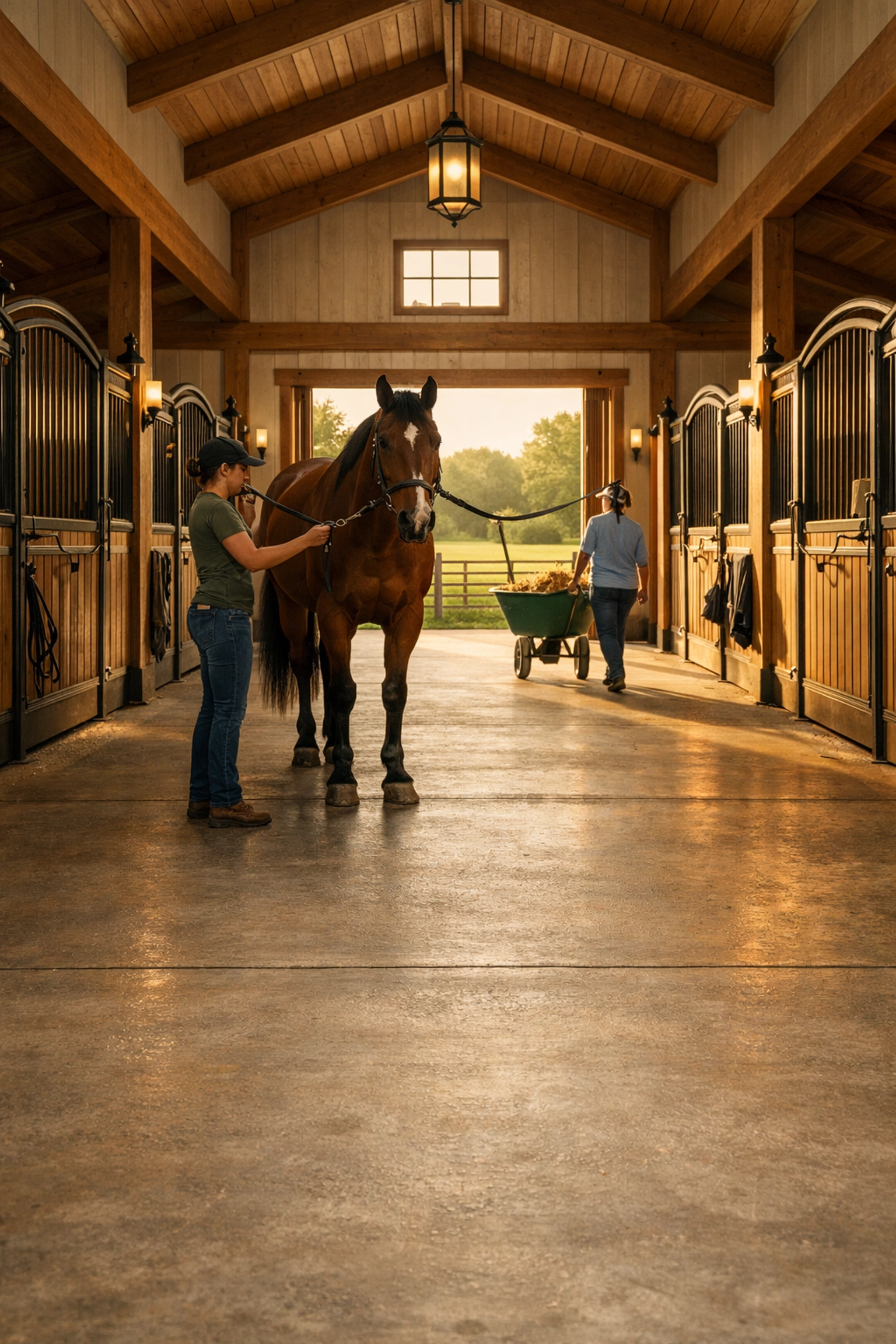
This extra two feet reduces stress-related behaviors in horses by up to 30 percent. When a horse doesn't feel crowded while standing in cross-ties, when two people can pass each other with equipment without creating a bottleneck, when air can actually circulate through the barn: that's when you see the return on investment.
The math is straightforward: upgrading from 12-foot to 14-foot aisles adds approximately 12 percent to construction costs but delivers measurable improvements in horse health and facility functionality. For a custom build on acreage in Union County or a renovation project in Mooresville, this is the first specification to lock in.
Stall Dimensions: One Size Doesn't Fit All Horses
The standard 12'×12' stall serves average-sized horses adequately. But if you're housing European Warmbloods, Thoroughbred jumpers, or any draft breed, those dimensions become problematic fast.
Proper stall sizing by horse type:
- Standard riding horses (900-1,100 lbs): 12'×12' minimum
- Sport horses and Warmbloods: 12'×14' or 14'×14'
- Draft breeds or multiple occupancy: 14'×16' or custom
I recently toured a renovated barn in the Waxhaw area where the owner designed flexibility into the layout: one horse enjoys a spacious 12'×24' double stall while smaller horses occupy standard dimensions. This approach costs less than building everything oversized while accommodating the specific horses on the property.
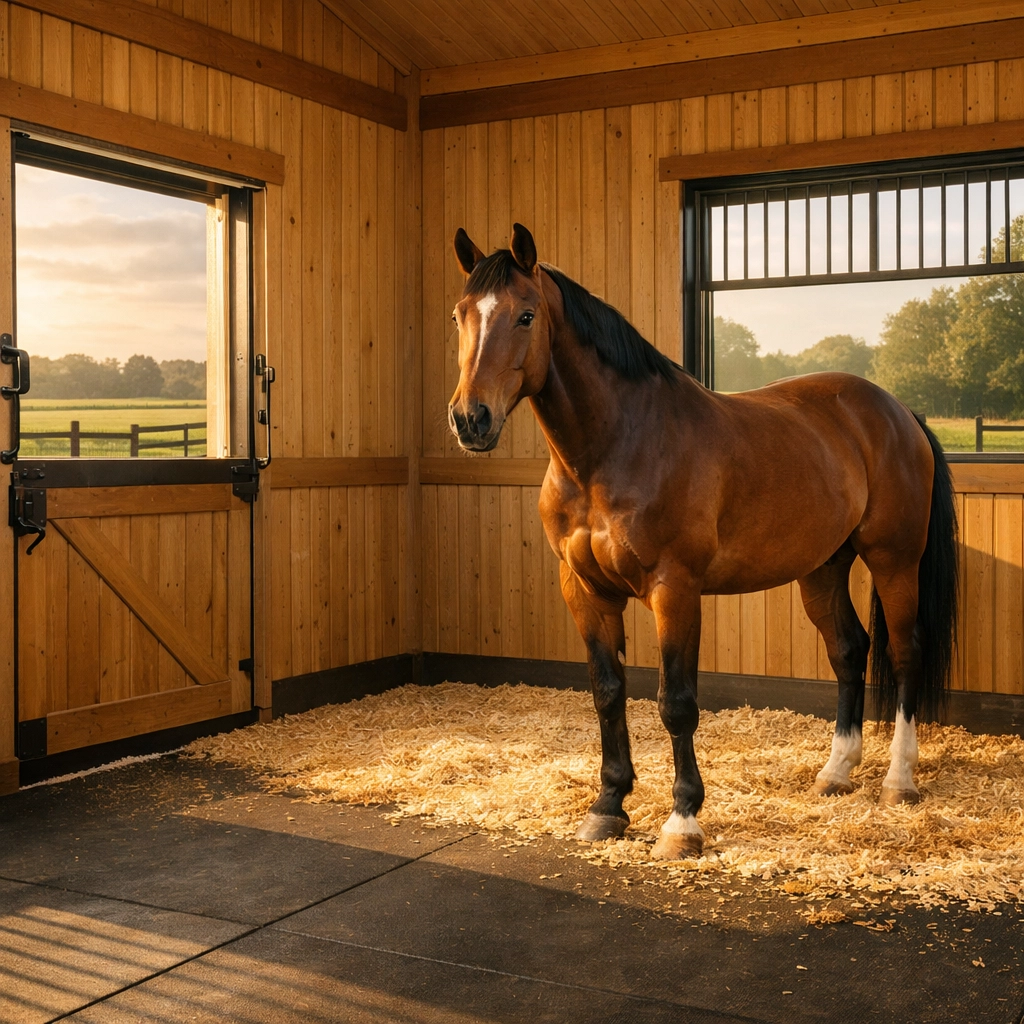
The critical consideration for Charlotte-area properties: North Carolina's humid summers mean horses spend more time inside than in arid climates. Adequate space prevents the behavioral issues that develop when horses feel confined during extended stall rest.
Ventilation: The Hidden Health Investment
Here's what separates amateur barn design from professional-grade facilities: respiratory health infrastructure.
Most people focus on fans and assume they've solved ventilation. But proper air exchange requires a coordinated system of windows, ceiling height, and strategic openings.
Minimum ventilation standards:
- At least 4 square feet of window space per stall
- Ceiling height minimum 10 feet (taller is better)
- Dutch doors on every stall for independent air control
- Ridge vents or cupolas for heat exhaust
The Dutch door specification deserves emphasis. The split design allows you to keep the top half open for ventilation while securing the bottom: essential during North Carolina's unpredictable spring weather when temperatures swing 30 degrees between morning and afternoon.
Charlotte's specific climate challenges: high humidity, sudden temperature changes, elevated pollen counts: make ventilation the single most important factor in preventing respiratory disease. A beautiful barn with poor air exchange becomes a veterinary expense waiting to happen.
Layout Strategy: Center Aisle vs. Shed Row
The classic debate in barn design comes down to two fundamentally different approaches, each with distinct advantages for North Carolina properties.
Center aisle barns place stalls on both sides of a central corridor. This traditional American design maximizes efficiency, centralizes climate control, and creates the classic stable aesthetic. For properties with limited building footprint or owners who want climate-controlled environments, center aisle designs dominate the Charlotte market.
Shed row barns line stalls side-by-side, each opening directly to the outdoors. Popular in milder climates and training operations, this layout provides individual ventilation control and reduces disease transmission. Several high-end facilities in Tryon have adopted shed row designs with covered walkways.
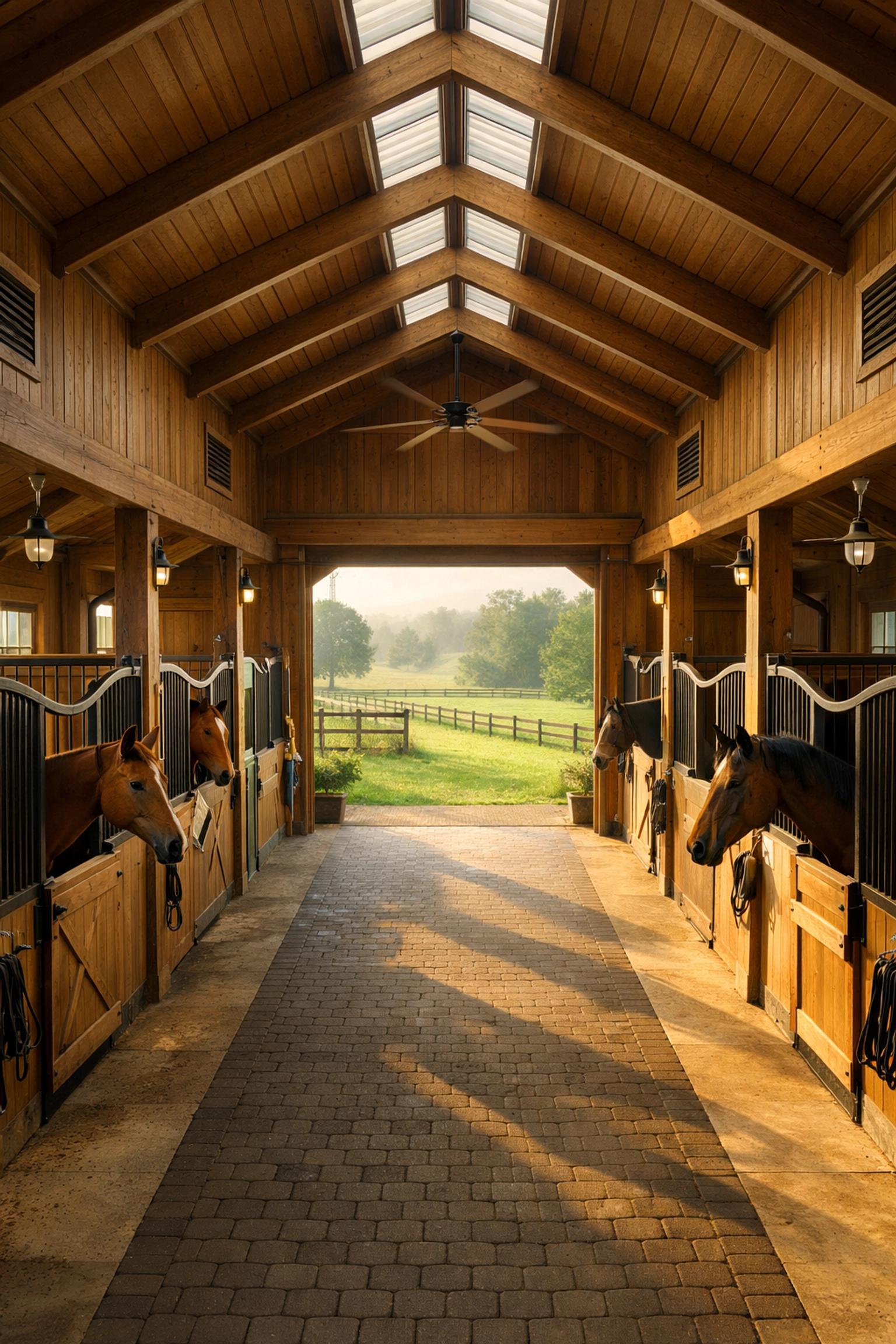
For most equestrian properties in the Charlotte metro area, center aisle designs offer better value and functionality. Our weather requires some climate protection, and the efficient layout works well for private owners managing their own horses.
The Flooring Decision That Affects Everything Else
Concrete slab flooring dominates new barn construction because it's economical and permanent. But smart designers in our region are reconsidering this default choice.
Alternative approach: individual pavers or interlocking systems
A renovation project I documented in Weddington replaced traditional concrete with individual pavers. The reasoning? Long-term maintenance flexibility. When drainage issues develop or stall configurations need modification, you can adjust individual sections without jackhammering entire slabs.
North Carolina's clay soil and seasonal drainage challenges make this consideration more important than in other regions. Proper flooring requires:
- Non-slip surface texture
- 2-3% grade for drainage
- Integration with French drains or perimeter systems
- Easy-to-clean material that withstands ammonia exposure
The flooring choice affects daily maintenance, long-term durability, and renovation costs for decades. It's worth the extended planning session with your builder.
What This Means for Charlotte-Area Property Buyers
When you're touring equestrian properties in Marvin, Harrisburg, or Davidson, these design principles become your evaluation checklist. The barn with custom ironwork and expensive wood finishes might actually function worse than a simpler facility built with proper dimensions.
Priority assessment questions:
- Measure the aisle width with your actual equipment
- Confirm stall dimensions match your horses (or anticipated horses)
- Count window square footage and verify ceiling height
- Test Dutch doors and ventilation systems during humid weather
- Walk the drainage patterns after rain
For properties with existing barns, renovation potential matters more than current condition. A structurally sound barn with 12-foot aisles can be modified more easily than rebuilding from scratch. But a facility with fundamental design flaws: inadequate ceiling height, poor site drainage, undersized stalls: presents expensive challenges.
The Investment Perspective
High-end stable design isn't about luxury features. It's about building infrastructure that maintains horse health, reduces veterinary costs, and retains property value in the competitive Charlotte equestrian market.
Properties with properly designed barns sell faster and command premium pricing because knowledgeable buyers recognize the difference. A facility built to these specifications requires less immediate modification and signals that the property was developed by someone who actually understands horses.
For sellers preparing to list, stable design audit often reveals cost-effective improvements that significantly impact perceived value. Sometimes it's as simple as widening a doorway, adding windows, or improving aisle lighting.
Moving Forward with Confidence
Whether you're planning a custom build, evaluating existing properties, or considering barn renovations, these design principles provide the framework for making informed decisions. The Charlotte equestrian market rewards properties that prioritize functionality alongside aesthetics.
The barns that endure: that maintain value through ownership changes, that accommodate different disciplines and horse types, that prevent rather than create problems: all share these fundamental design characteristics. They're built by people who understand that every dimension serves a purpose.
If you're serious about finding or creating a high-end equestrian property in the Charlotte area, let's talk about what truly matters in stable design. Visit our current listings or reach out directly to discuss your specific requirements. Because the conversation should always start with the horses, not the real estate.