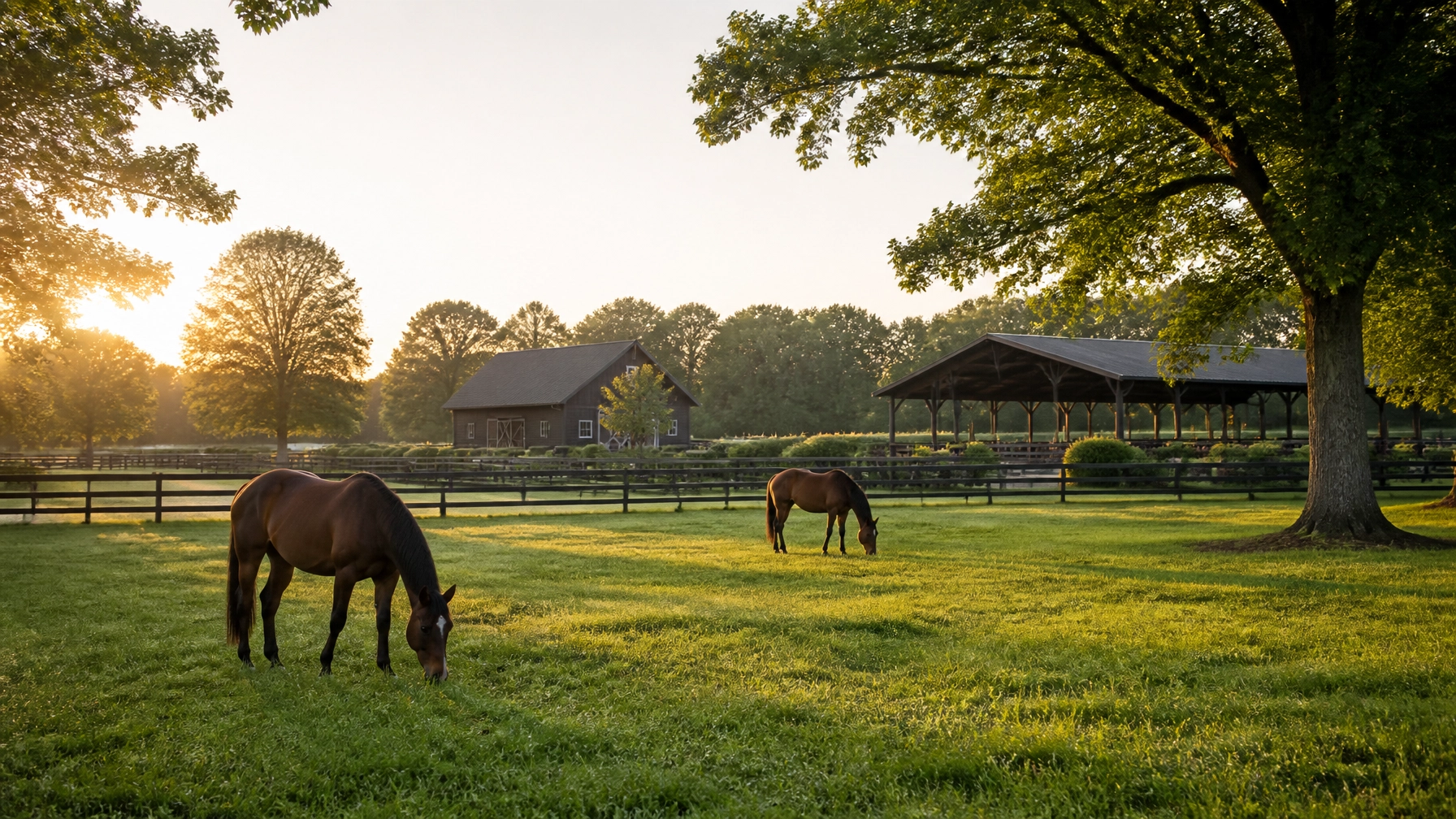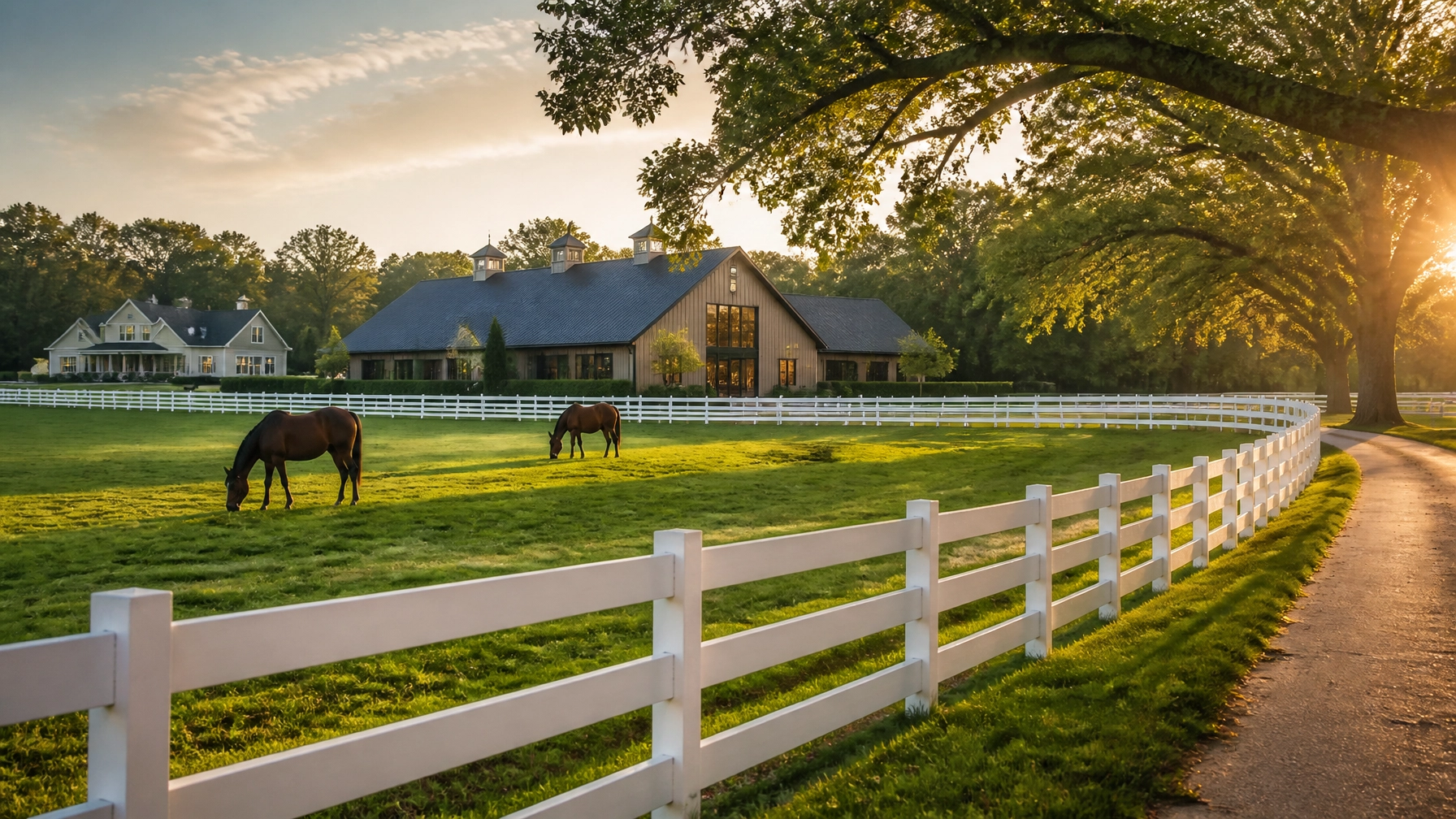
A good horse farm video answers the questions a buyer would otherwise drive out to ask: how the horses live, how the land lays out and drains, and how chores flow from barn to pasture. To prepare, fix and clean everything the camera will see, film in soft light, and hire a drone pilot who holds an FAA Part 107 remote pilot certificate. Plan the horses' day around the shoot so they stay calm and safe.
Plan the tour around what buyers need to know
A buyer watching your video is deciding whether the farm is worth a trip. Organize the footage the way a buyer would walk the property:
- Arrival: the road, gate, and drive
- An aerial overview of the layout
- The barn, inside and out
- The arena
- Pastures, water, and shelter
- Support areas: hay storage, manure area, equipment, trailer parking
- The house
Following that order lets a viewer build a mental map, which still photos alone rarely do.
The shot list
| Shot | What it shows buyers | Tip |
|---|---|---|
| Entrance and drive | Trailer access and turning room | Show a truck and trailer can turn around |
| Aerial overview | Layout, fence lines, neighbors | Hold the shot long enough to read the paddocks |
| Barn exterior | Roof, siding, grading at the walls | Include the side where water drains |
| Aisle walk-through | Width, light, airflow | One slow pass at walking pace |
| One stall | Size, door, floor, window | State the stall size in a caption |
| Wash stall, tack room, feed room | How the barn works | Turn on every light |
| Hay and bedding storage | Capacity and separation from stalls | Show the path from storage to barn |
| Arena | Size, footing, fence, lights | Drag it first; film from a corner and along the long side |
| Each pasture | Grass cover, shelter, water | Keep the water source and gate in frame |
| Fence lines | Fence type and condition | Film the best and the most-used runs |
| Manure area and equipment | Daily chores | Clean and organized, not hidden |
Two to four weeks before: fix what the camera will see
Video magnifies small problems. A sagging gate or a broken board reads as deferred maintenance, and buyers will look for it in person. Work through this list:
- Replace broken fence boards and tighten loose wire.
- Rehang gates that drag and fix latches.
- Replace burned-out bulbs and clean light fixtures and cobwebs in the barn.
- Fix or remove anything broken in stalls, such as bent bars or cracked buckets.
- Mow pastures and trim fence lines a few days before the shoot so the grass looks even.
- Spread, haul off, or tidy the manure pile.
- Drag and water the arena the morning of the shoot.
- Clear the aisle of tools, hoses, wheelbarrows, and feed bags.
For larger projects that may be worth doing before you list, see horse farm upgrades that pay off.
The video should show the farm as it is. Leaving a problem out of the footage does not change what must be disclosed, which our guide to mistakes when selling a horse farm covers in detail.
The week of the shoot: light, weather, and horses
Light. Early morning and late afternoon give soft, warm light outdoors and fewer hard shadows. Inside the barn, open the doors at both ends and turn on every light so the aisle does not fall into darkness on camera.
Weather. Pick a dry day after the ground has had a chance to drain. Puddles in the gateways and wet footing in the arena become the story of the video.
Horses. Decide in advance whether horses will appear. Clean, relaxed horses grazing in a paddock show that the farm works. Horses in stalls during filming should have clean water and fresh bedding. Keep a handler nearby, and keep horses out of the areas being filmed up close.
Drone footage: the rules in North Carolina
An aerial shot is often the most useful part of a farm video, because it shows the layout no ground camera can. It is also regulated. The FAA explains the basic rule:
"If you have a small drone that is less than 55 pounds, you can fly for work or business by following the Part 107 guidelines."
Federal Aviation Administration, Certificated Remote Pilots including Commercial Operators
Marketing a property counts as business use. The NC Department of Transportation's drone program gives this exact example:
"For example, if a real estate agent uses a drone to photograph a property in order to advertise or promote that real estate for sale or lease, then that drone operation is commercial."
A friend with a hobby drone offering to fly for free does not change that. The FAA's recreational flyer guidance says, "Compensation, or the lack of it, is not what determines if a flight was recreational or not." There is one simplification: NCDOT's program page states that "North Carolina no longer requires commercial and government drone operators to obtain an N.C. permit." Its commercial operators page dates that change to after Dec. 1, 2024. The federal Part 107 rules still apply.
What to ask a drone pilot
- Do you hold an FAA remote pilot certificate under Part 107?
- Is the drone registered with the FAA? The FAA says registration costs $5, is valid for 3 years, and that registered drones have had to broadcast Remote ID since Sept. 16, 2023, unless flown within an FAA-recognized identification area.
- Is my property in controlled airspace that needs an FAA authorization? This matters near Charlotte Douglas International Airport and other airports.
- Do you carry liability insurance for drone work?
Respect neighbors' privacy
North Carolina's drone statute, G.S. 15A-300.1, generally prohibits using a drone to photograph an individual without consent for the purpose of publishing the image, and to conduct surveillance of private property without the owner's consent. Keep the footage on your own land, avoid capturing neighbors in their yards, and get permission from boarders, students, or staff who might appear on camera.
Keep horses calm around the drone
Horses notice drones. A study published in Rangelands tested horse responses to a small drone flown at 3, 15, and 33 meters above ground:
"Horses took evasive measures after approximately 20 seconds at lower AGL (i.e., <3 m)."
The researchers found that vigilance was the most common response at every height, that horses recovered sooner when the drone flew higher, and that most horses recovered within 60 seconds. For a listing shoot, that suggests a simple plan:
- Bring horses into stalls or a well-fenced paddock away from the flight path before the drone goes up.
- Tell boarders and barn staff when the drone will fly.
- Ask the pilot to stay high over any field with horses and to avoid low passes.
- Keep a handler with any horse that must stay out during the flight.
Captions and narration: measured facts only
Buyers will compare your video with other listings, so give them numbers they can trust. Measure, do not estimate:
- Number of stalls and their size
- Arena dimensions and footing type
- Acres in pasture versus woods, if known from a survey or GIS
- Fence types by area
- Water sources in each field
- Year the barn and arena were built, if documented
Leave out anything you cannot back up. If a number comes from county GIS rather than a survey, say so.
Before you publish: a privacy check
Watch the final cut with a security eye. Look for visible gate or alarm codes, keypads, open safes or tack trunks with valuable gear, vehicle license plates, and personal documents on desks or walls. Blur or reshoot anything you would not want strangers to see.
For the full listing process, see our guide to selling a horse farm and our horse farm seller services. If you would like help planning the shoot, contact us.
Sources
- Federal Aviation Administration, Certificated Remote Pilots including Commercial Operators
- Federal Aviation Administration, Recreational Flyers and Community-Based Organizations
- NCDOT, Unmanned Aircraft Systems Program
- NCDOT, Unmanned Aircraft Commercial Operators
- North Carolina General Statutes, G.S. 15A-300.1: Restrictions on use of unmanned aircraft systems
- Rangelands Gateway, Evaluating Changes in Horse Behavior as a Response to Small Unmanned Aerial Vehicles