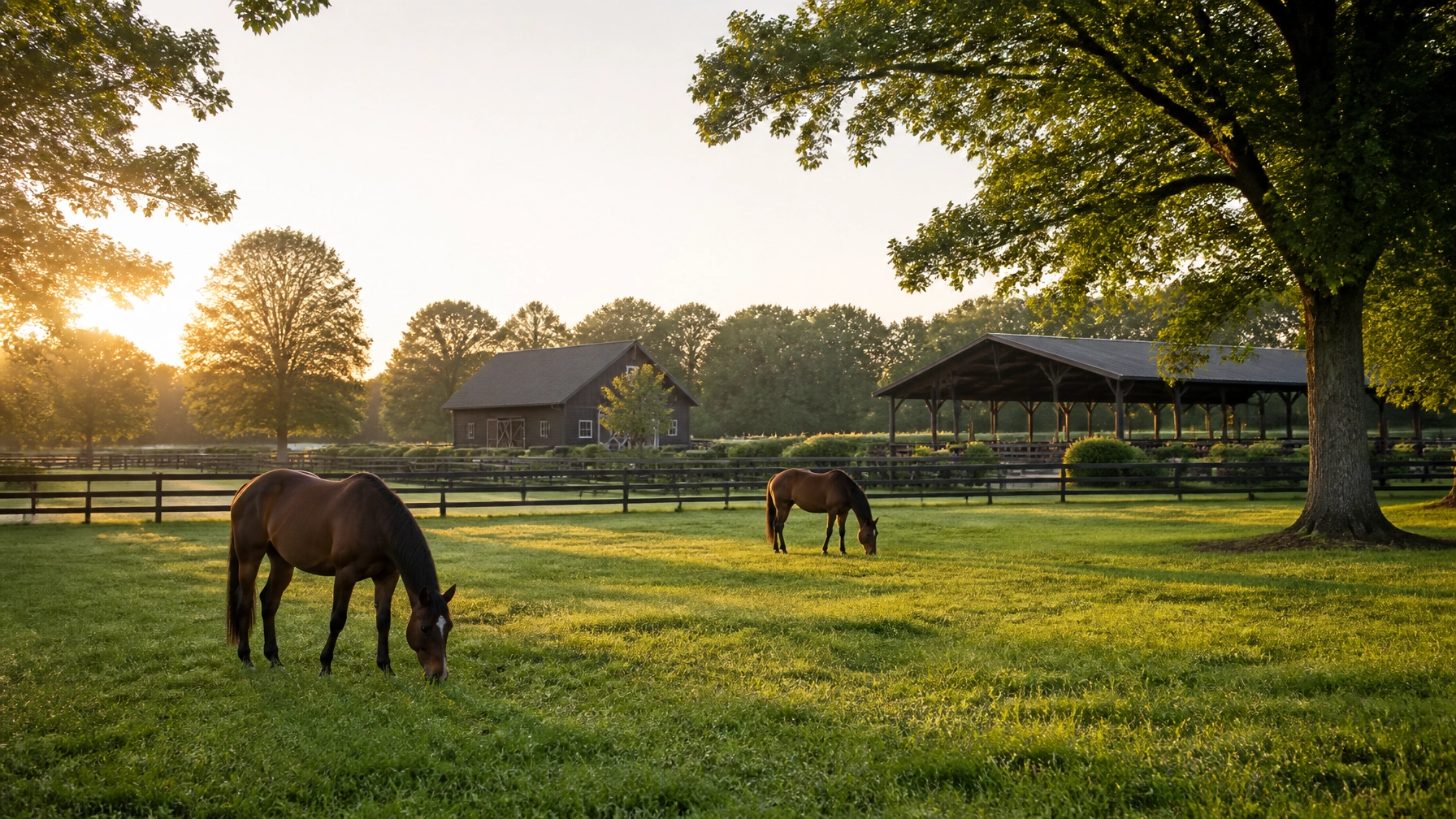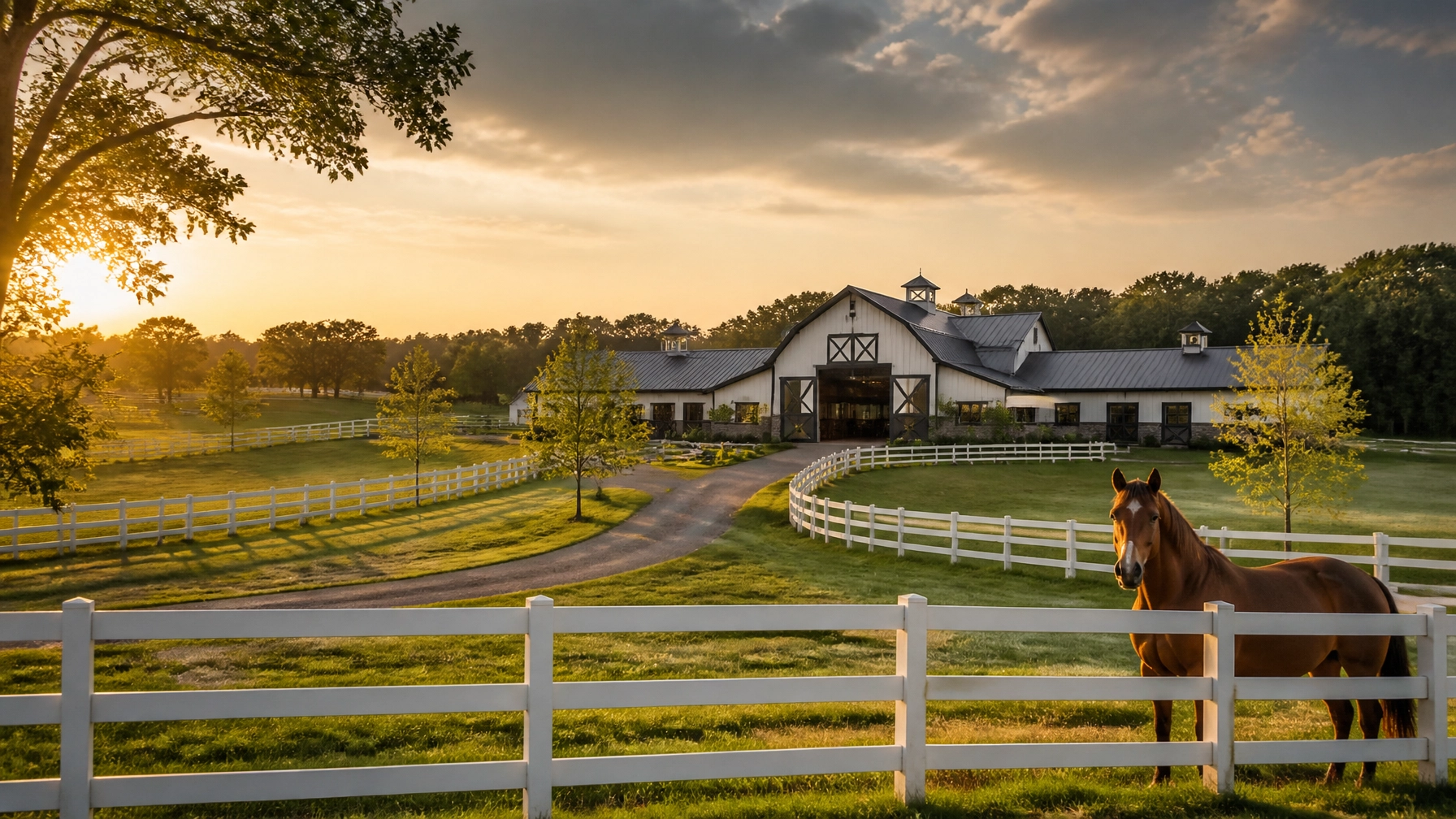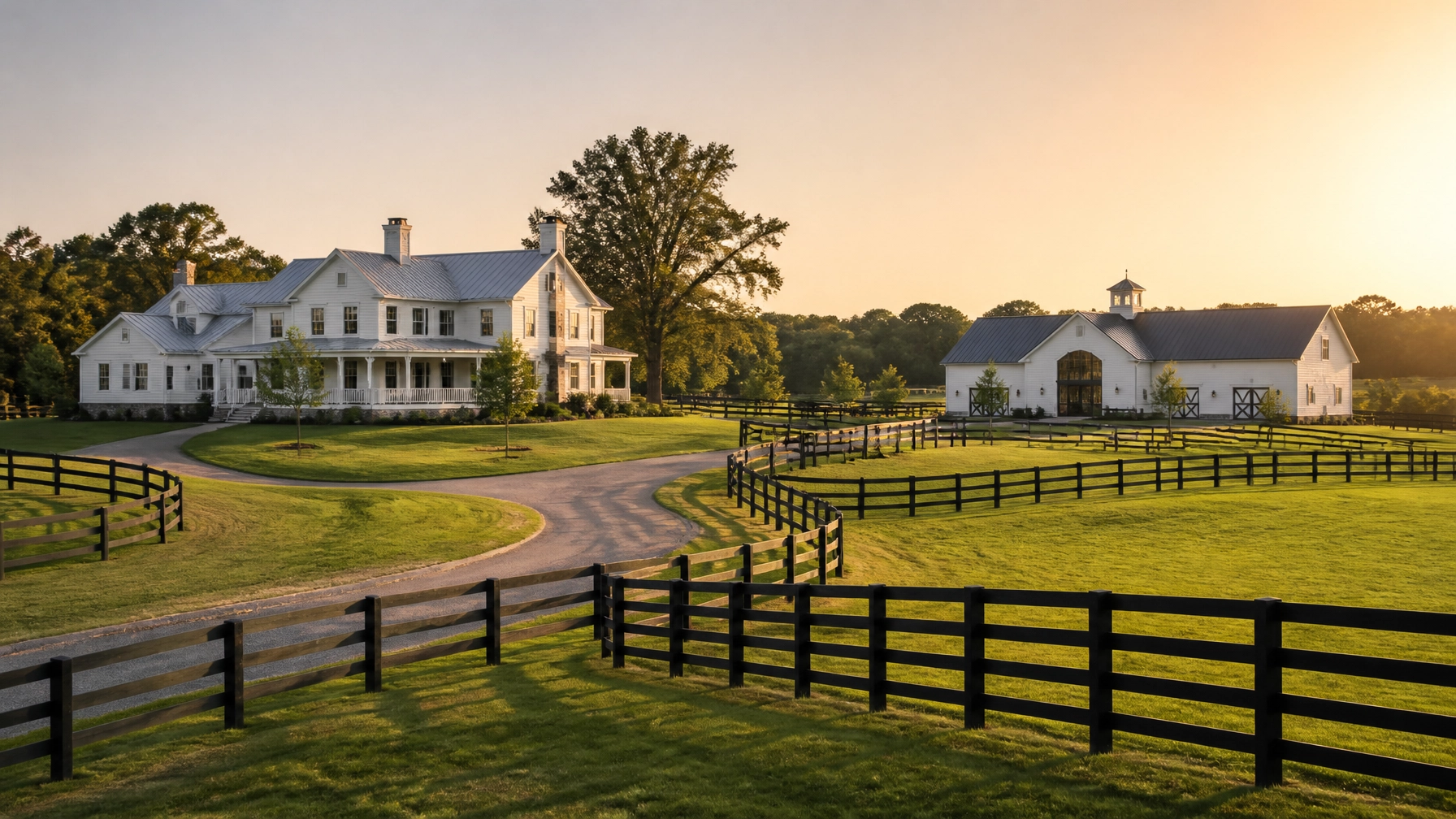
At Carolina Horse Farm Realty, we specialize in horse farms, equestrian estates, and land for horses across the Charlotte Metro area, from the rolling pastures of Waxhaw to the refined estates of Davidson.
Buying a horse property is a deeply personal journey that blends residential needs with complex agricultural requirements. Unlike a standard suburban home purchase, an equestrian acquisition involves evaluating soil drainage, local zoning ordinances, and long-term land management. Whether you are searching for horse farms for sale or exploring the potential of a luxury estate, understanding the nuances of the North Carolina landscape is essential.
Our team has identified the 10 most critical factors every buyer must consider when navigating the Charlotte equestrian market.
1. Verify Zoning and Animal Unit Density Before You Fall in Love
Never assume that a large lot automatically permits horses. Zoning regulations vary significantly across Mecklenburg, Union, and Cabarrus counties. Many municipalities use an "animal unit" system: for example, requiring a minimum of two acres for the first horse and one additional acre for each subsequent horse. Before viewing properties, we recommend checking the specific parcel’s zoning to ensure your intended use aligns with local law.
2. Understand the "NC Red Clay" and Soil Drainage
The Charlotte region is known for its heavy red clay soil. While beautiful, clay can hold water, leading to muddy paddocks and potential hoof issues like thrush or abscesses.
- The Benefit: High-quality equestrian properties in Charlotte NC are often situated on land with natural elevation or have had professional drainage systems installed.
- The Expert Tip: Look for properties that feature "percolating" soil or established "all-weather" turnouts to ensure your horses stay dry during the rainy spring months.

3. Evaluate the "Agrihood" vs. Dedicated Equestrian Communities
The Charlotte Metro area offers diverse lifestyle options. If you are looking for a community that prioritizes a farm-to-table lifestyle, a "hyper-local" destination like Summit Farms in Davidson offers a unique "agrihood" experience centered around shared agriculture and nature trails. However, if your primary focus is on-site stabling and riding, you may prefer a dedicated equestrian community like Valley Farms in Waxhaw.
4. Differentiate Between Luxury Lifestyle and Horse-Ready Infrastructure
Some neighborhoods, such as Chapel Cove near Lake Wylie, offer incredible luxury living and high-end amenities but may not be designed for on-site horse keeping. It is vital to distinguish between a "pastoral view" and a "functional farm."
- Statistical Insight: 65% of equestrian buyers in our region prioritize existing barn infrastructure over interior home renovations, as building quality stalls and arenas post-purchase can often exceed the cost of a kitchen remodel.
5. Prioritize Barn Ventilation for the Southern Climate
North Carolina summers are beautiful but humid. A barn designed for our climate should prioritize airflow.
- The Requirement: Look for high ceilings, vented ridge caps, and large "cool-down" aisles.
- Our Knowledge: We often advise clients to look for "center-aisle" barns with Dutch doors that allow horses to access their individual paddocks while maintaining a cross-breeze throughout the structure.
6. Assess Water Sources and Irrigation Needs
Does the property rely on a private well or city water?
- The Unique Requirement: A horse can drink 10 to 15 gallons of water per day. If you are managing a 10-stall facility, your water system must be robust enough to handle high demand without compromising the pressure in the main residence. We recommend a professional well flow test as a standard part of your due diligence.
7. Analyze Pasture Quality and Forage Management
In the Charlotte area, most pastures consist of a mix of Tall Fescue and Bermuda grass.
- The Strategy: Rotational grazing is the key to maintaining healthy land. When touring equestrian properties, look at the condition of the fencing and the density of the grass. Overgrazed land can take years to recover and may require significant investment in seeding and fertilization.
8. Proximity to Regional Equestrian Hubs
Charlotte is perfectly positioned for the competitive rider. Being within a two-hour drive of the Tryon International Equestrian Center (TIEC) is a major selling point for many of our clients.
- The Advantage: Living in towns like Weddington or Waxhaw places you near top-tier veterinary clinics, farriers, and specialized feed stores, ensuring your equine partners receive the best care without long-distance travel.
9. Navigate HOA Covenants with Extreme Caution
Even if a property is zoned for horses, a neighborhood’s Homeowners Association (HOA) may have restrictive covenants.
- What to Check: Some HOAs dictate the type of fencing allowed (e.g., three-board vs. four-board), the placement of manure piles, and even the hours you can operate your arena lights. We meticulously review these documents to ensure they don't stifle your equestrian lifestyle.
10. Partner with a Specialized Equestrian Realtor
The complexities of land use, barn construction, and agricultural value require more than a standard residential agent.
- Our Team: "We understand the unique requirements of horse properties, from barn layouts to pasture management," says the team at Carolina Horse Farm Realty. We speak your language: whether you're discussing the benefits of a GGT footing arena or the nuances of a run-in shed.
The Carolina Horse Farm Realty Difference
Our commitment to the equestrian community goes beyond the transaction. We build trusted partnerships through honest communication and a deep-seated love for the land.
- 11 Cities Served: Covering the entire Charlotte Metro from Pineville to Mooresville.
- Expert Local Knowledge: Deep understanding of Union and Mecklenburg zoning.
- Personalized Service: Tailored searches focused on your specific riding discipline.
"Carolina Horse Farm Realty made our transition to Waxhaw seamless. Their knowledge of local drainage and barn builders saved us thousands in potential mistakes." : Estate Buyer, Weddington, NC
Start Your Equestrian Journey Today
Finding the perfect horse property requires a blend of vision and technical expertise. Whether you are ready to list your current farm or are just beginning to search for your dream estate, we are here to guide you.
View Our Current Equestrian Listings