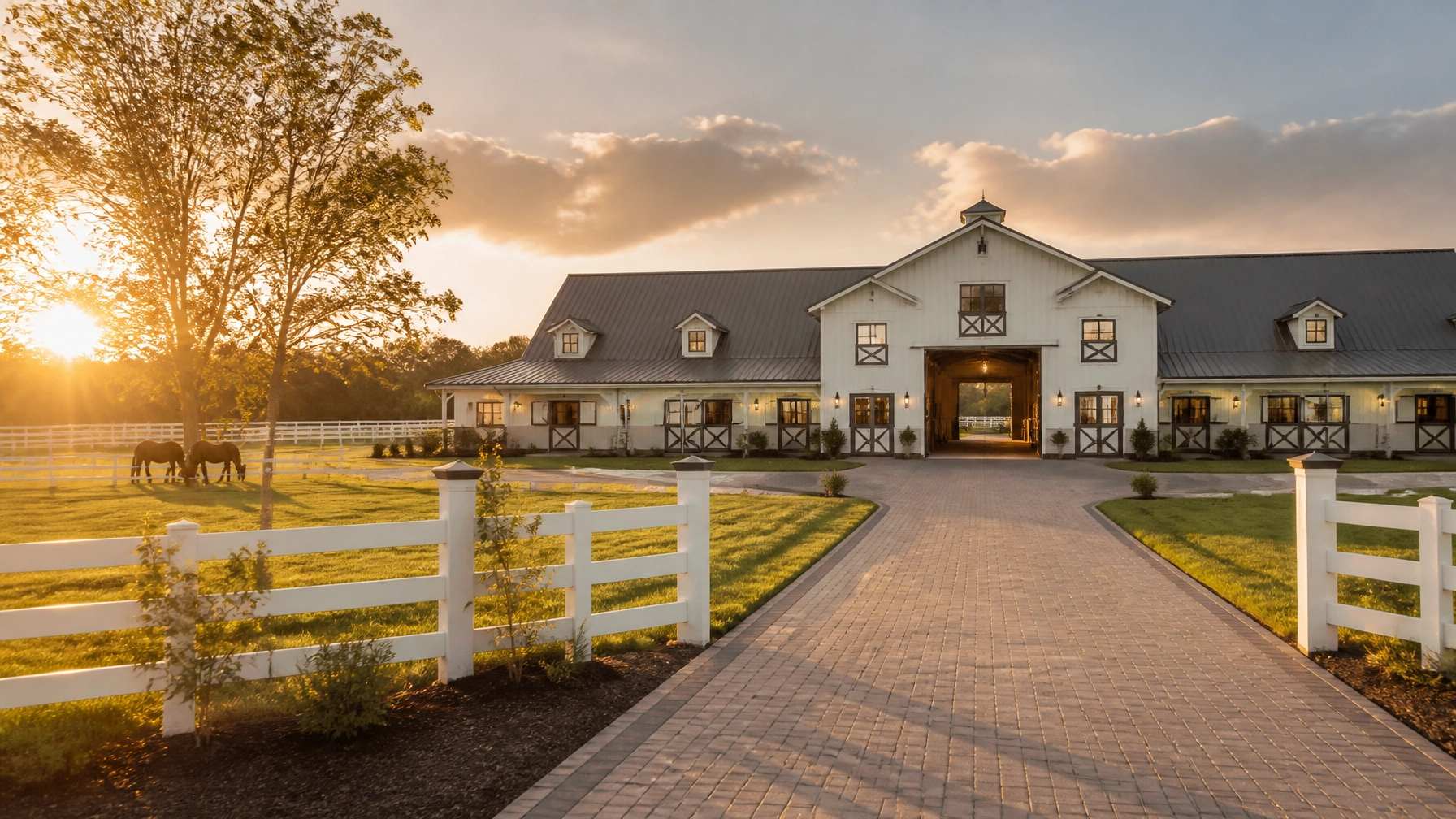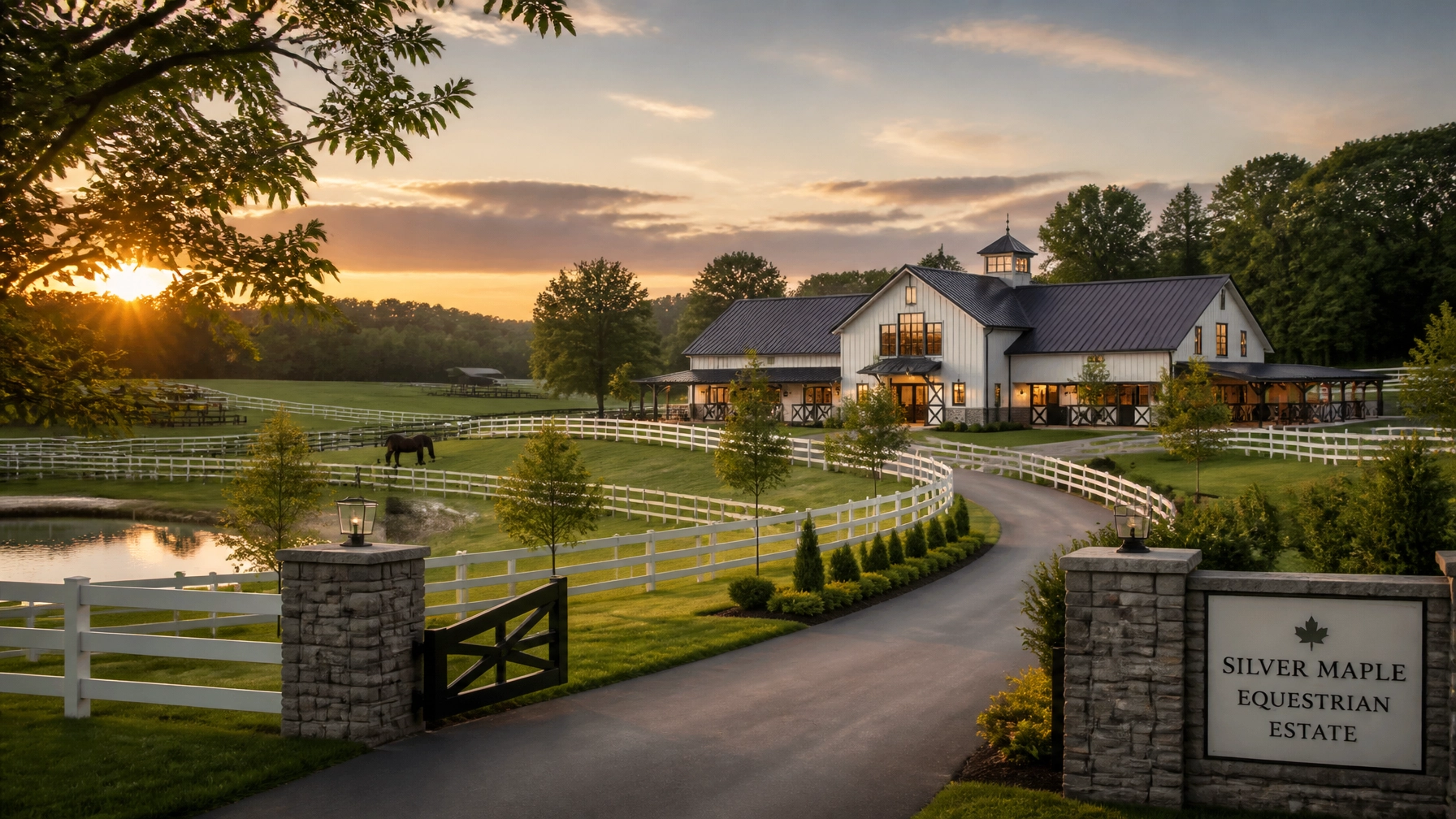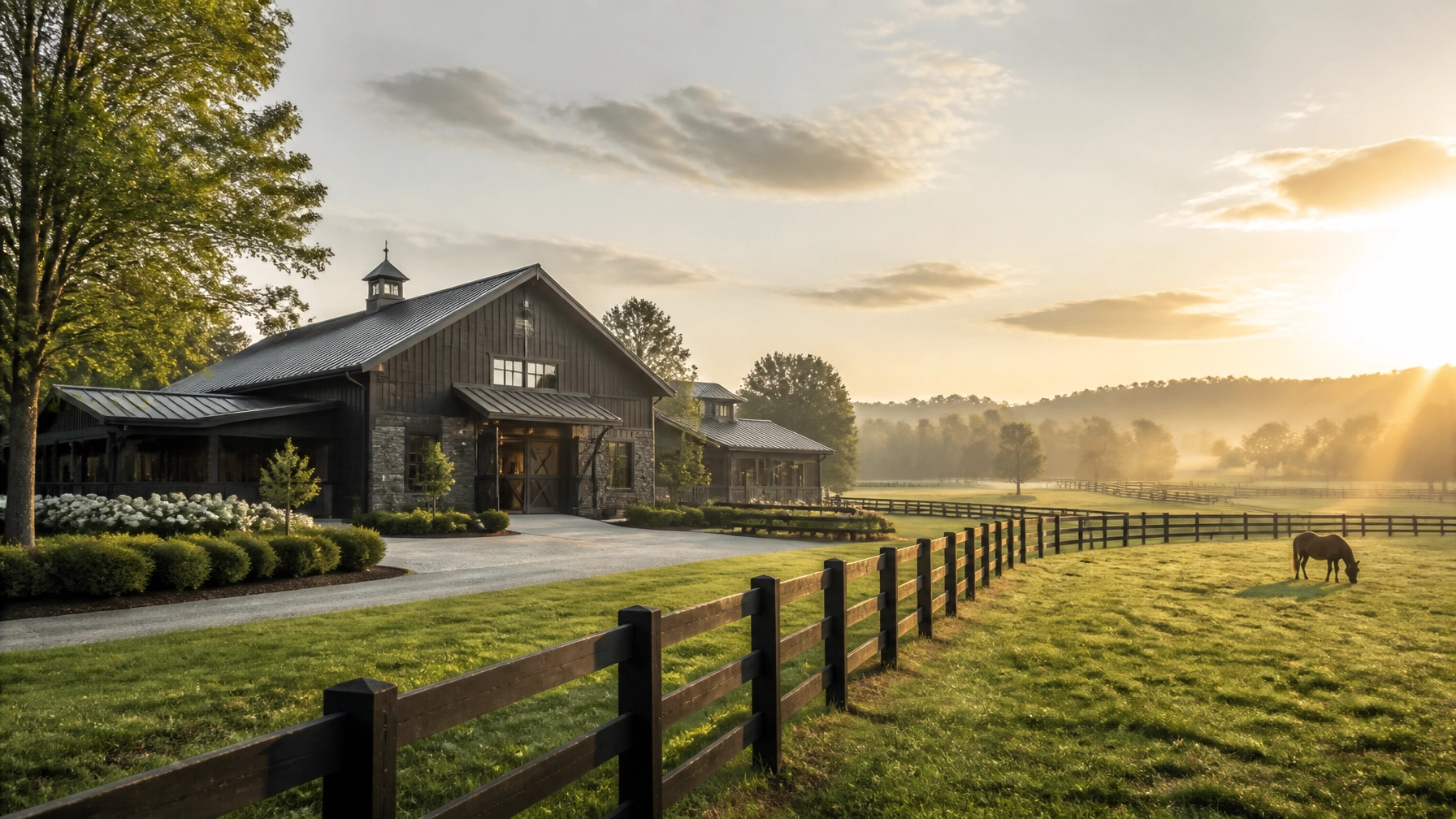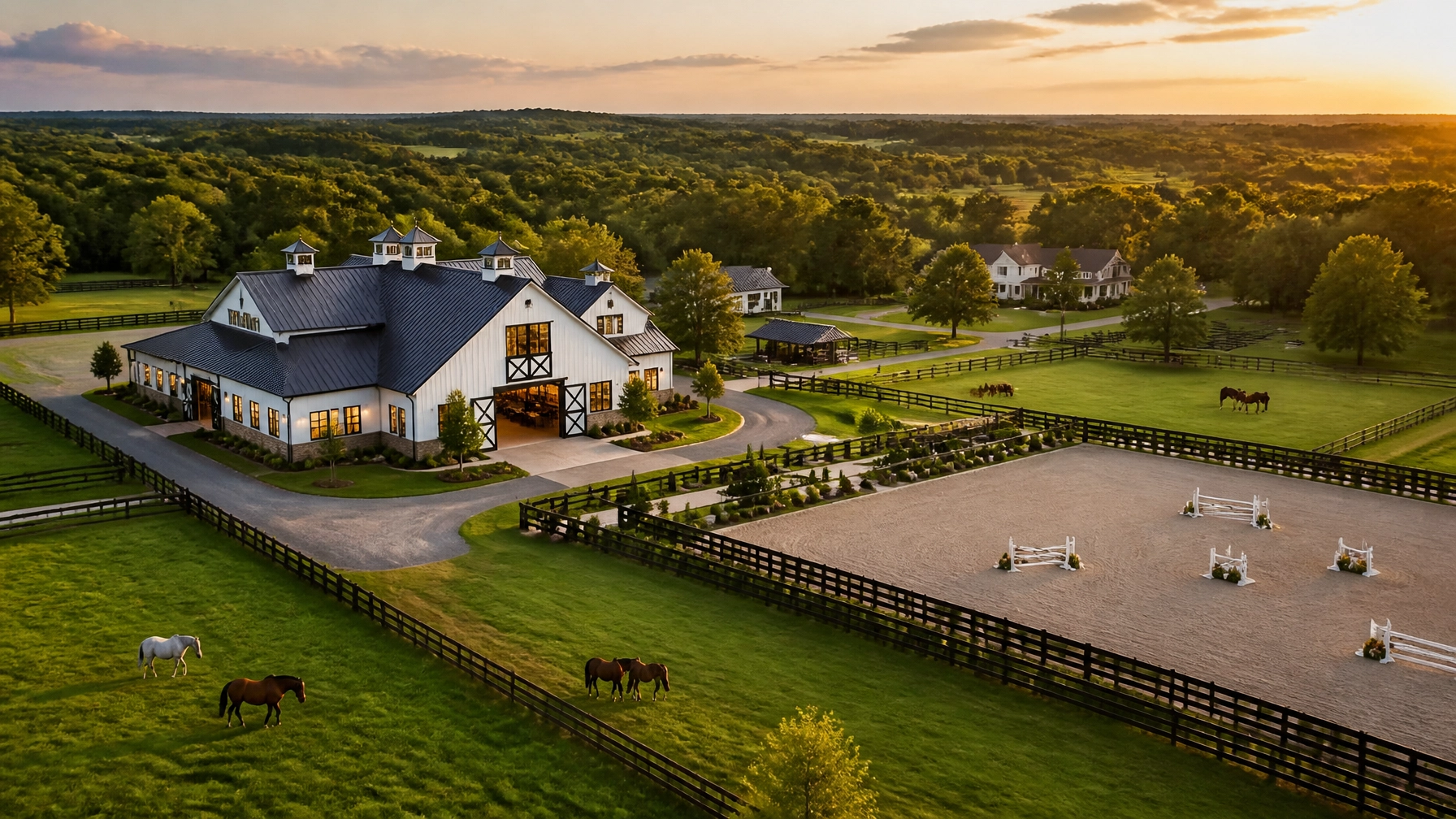
Carolina Horse Farm Realty specializes in horse farms, equestrian estates, and land for horses across the Charlotte Metro area, from luxury dressage facilities to scenic acreage.
If you have spent any time recently searching for horse farms for sale in the Charlotte area, you know that the landscape has shifted. We are now well into 2026, and the "secret" of the North Carolina Piedmont has officially been out for years. What was once a market defined by sleepy backroads and quiet acreage has transformed into one of the most competitive equestrian corridors in the Southeast.
As Realtors who spend more time in boots than in suits, we understand that buying a horse property isn't just a real estate transaction: it is a lifestyle commitment. You aren't just looking for square footage; you are looking for drainage, soil quality, barn ventilation, and trail access.
To help you navigate this complex market, our team has compiled the 10 critical things you need to know about Charlotte’s equestrian real estate market in 2026.
1. Market inventory remains at historic lows
The most important statistic to understand in 2026 is the inventory gap. Currently, the Charlotte metro area maintains an average of only 24 days of inventory for established horse properties. This means that when a well-maintained farm with functional infrastructure hits the market, it is often under contract before the weekend is over.
We have seen a significant increase in "off-market" activity. Many of the most desirable equestrian properties are trading quietly between private networks. If you are only looking at public portals, you are seeing less than 70% of the actual market opportunity.
2. Pricing benchmarks have settled at a new premium
The days of finding turn-key 10-acre farms for under $700,000 are largely behind us in the immediate Charlotte vicinity. As of mid-2026, the average list price for a dedicated equestrian property in the metro area sits at $1.6 million.
Acreage costs have also seen a steady climb, with prime, buildable land often reaching $100,000 per acre in high-demand pockets like Waxhaw and Davidson. Understanding these numbers upfront allows our clients to set realistic expectations for their search and prepare for the financial commitment of maintaining high-quality horse land.
3. Summit Farms has set the new standard for Davidson luxury
For those seeking the pinnacle of equestrian living, Summit Farms in Davidson has emerged as the premier destination in 2026. This planned equestrian community successfully bridges the gap between high-end residential luxury and professional-grade horse facilities.
Summit Farms is specifically designed for the buyer who wants the security of a gated community with the freedom of a private farm. With its proximity to the amenities of Davidson and easy access to I-77, it has become the gold standard for luxury equestrian estates in the northern Charlotte corridor. If you are looking for premier listings in the Davidson area, Summit Farms should be at the top of your list.

4. Chapel Cove offers a strategic gateway for Southwest buyers
While not a dedicated "horse farm" community itself, Chapel Cove has become a strategic anchor for equestrian enthusiasts who want to live near the water while keeping their horses at nearby boarding facilities or smaller private lots in the Southwest Charlotte area.
We frequently work with families who choose the lifestyle of Chapel Cove for its lake access and community amenities, while we help them secure acreage or farmettes in the nearby Steele Creek or Clover areas. This "hybrid" lifestyle is a growing trend in 2026, allowing buyers to enjoy the best of Charlotte's residential growth while remaining within a 15-minute drive of their stables.
5. Infrastructure value outpaces land value
In the 2026 market, "bones" matter more than ever. With construction costs for barns and arenas remaining high, properties with existing, high-quality infrastructure are commanding a significant premium.
A farm with a pre-installed GGT footing arena, a center-aisle barn with proper ventilation, and established four-board fencing will often sell for 20% more than the sum of its parts. Buyers are increasingly looking for "plug-and-play" facilities to avoid the 12-to-18-month lead times currently associated with new farm construction in the Charlotte area.

6. Zoning and land use require expert navigation
One of the biggest pitfalls we see buyers face is a lack of understanding regarding local zoning. In 2026, many municipalities around Charlotte have tightened regulations on "animal units per acre."
Before you fall in love with a 5-acre property for your four horses, you must verify the specific zoning for that parcel. Our team specializes in navigating these local regulations, ensuring that your dream of a backyard barn doesn't get shut down by a surprise county ordinance or HOA restriction.
7. The "Tryon Pipeline" is a major location driver
Charlotte's proximity to the Tryon International Equestrian Center (TIEC) continues to be a primary reason why professional trainers and serious competitors move to this region.
Living in the southern or western parts of the Charlotte Metro: such as Pineville, Waxhaw, or Tryon itself: places you within an easy hour's drive of world-class competition. This "Tryon Pipeline" ensures that property values in these corridors remain stable, as there is a constant influx of equestrian professionals looking for winter bases or year-round training facilities.
8. Soil health and pasture management are non-negotiable
As horse people, we know that the most beautiful barn in the world is useless if the pastures are a mud pit. The 2026 buyer is more educated than ever about soil quality.
The Charlotte region features a mix of "Carolina Red Clay" and loamier soils. Properties that have been managed with proper pasture rotation, lime applications, and drainage systems are highly prized. When we walk a property with you, we aren't just looking at the kitchen: we are looking at the stand of grass and the slope of the land to ensure your horses will thrive.
9. Smart technology has entered the barn
The 2026 equestrian property is a "smart" property. We are seeing a surge in demand for facilities equipped with:
- Integrated camera systems for foaling stalls or stall rest monitoring.
- Automated watering systems with consumption tracking.
- Climate-controlled tack rooms with humidity sensors to protect expensive leather.
- Remote-access gate and security systems for large estates.
These features are no longer just "nice-to-haves"; they are becoming standard in the luxury horse farm market and contribute significantly to a property's resale value.
10. Long-term appreciation remains strong in the "Equestrian Crescent"
Despite broader economic shifts, the "Equestrian Crescent": the arc of horse-friendly land surrounding Charlotte: has shown remarkable resilience.
"Our team understands the unique requirements of horse properties from barn layouts to pasture management," says one of our recent clients who purchased a facility in Mooresville. "They didn't just show us houses; they showed us functional farms that would hold their value."
Whether you are looking for a luxury dressage estate or a quiet place to retire your senior horses, the 2026 Charlotte market offers incredible opportunities for those who know where to look and have the right partnership to guide them.

Ready to find your place in the Piedmont?
Navigating the 2026 horse farm market requires more than just a real estate license; it requires a deep-rooted understanding of the equestrian life. At Carolina Horse Farm Realty, we are dedicated to helping you find a property that supports both your lifestyle and your investment goals.
Contact our team today to start your search or to receive a professional valuation of your current equestrian estate.