

You bought the property for your horses. The barn is exactly what you envisioned, the paddocks are well-fenced, and you've finally got the space you needed. But six months in, you're noticing the pastures aren't quite what they were, bare patches developing, weeds taking over, and that lush green grass you expected isn't bouncing back the way it should.
North Carolina's climate is exceptional for pasture growth when managed correctly. Our long growing season, adequate rainfall, and mild winters give us advantages many regions don't have. But those same conditions also make certain management mistakes costly, both to your land and your budget. After years of working with equestrian properties across the Charlotte Metro area, I've seen these seven mistakes repeatedly, even among experienced horse owners who know their animals inside and out.
Mistake #1: Guessing at Stocking Density Instead of Calculating It
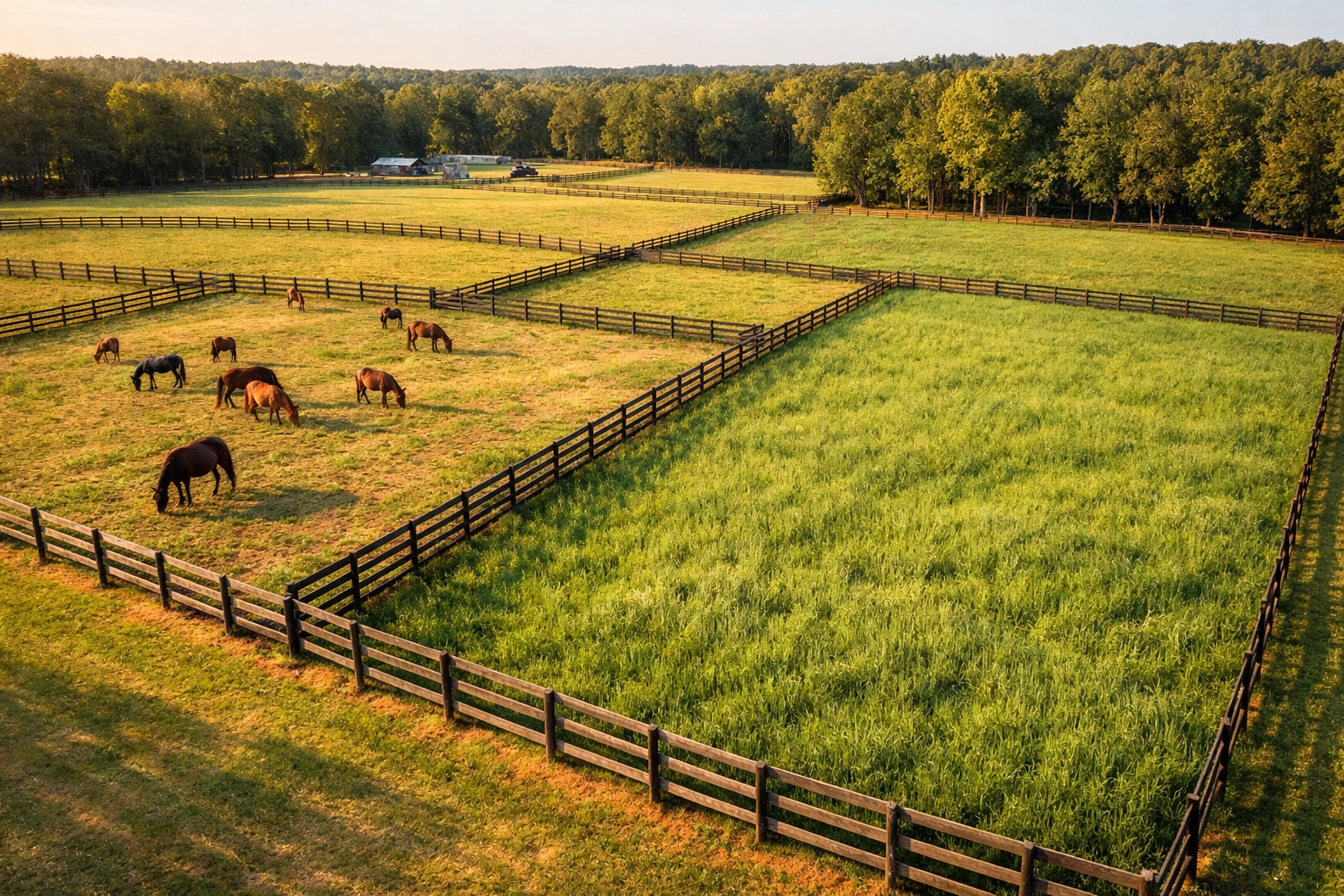
The most common misconception is that "a couple of acres per horse" works everywhere. The reality is more nuanced. Under light management conditions in North Carolina, you need 2-4 acres per horse to maintain healthy pasture without intensive intervention. When you increase stocking density beyond this ratio, you don't just need more management, you need significantly more.
The Fix: Calculate your actual usable pasture acreage (excluding the barn area, sacrifice lots, and woodlands), then honestly assess your management commitment. If you're planning to keep horses on smaller acreage, commit to proper seeding, regular fertilizing, and structured rotation from day one. Intensive pasture management isn't optional at higher densities, it's the only thing standing between you and a dirt lot.
Mistake #2: Skipping Soil Testing Because "The Grass Looks Fine"
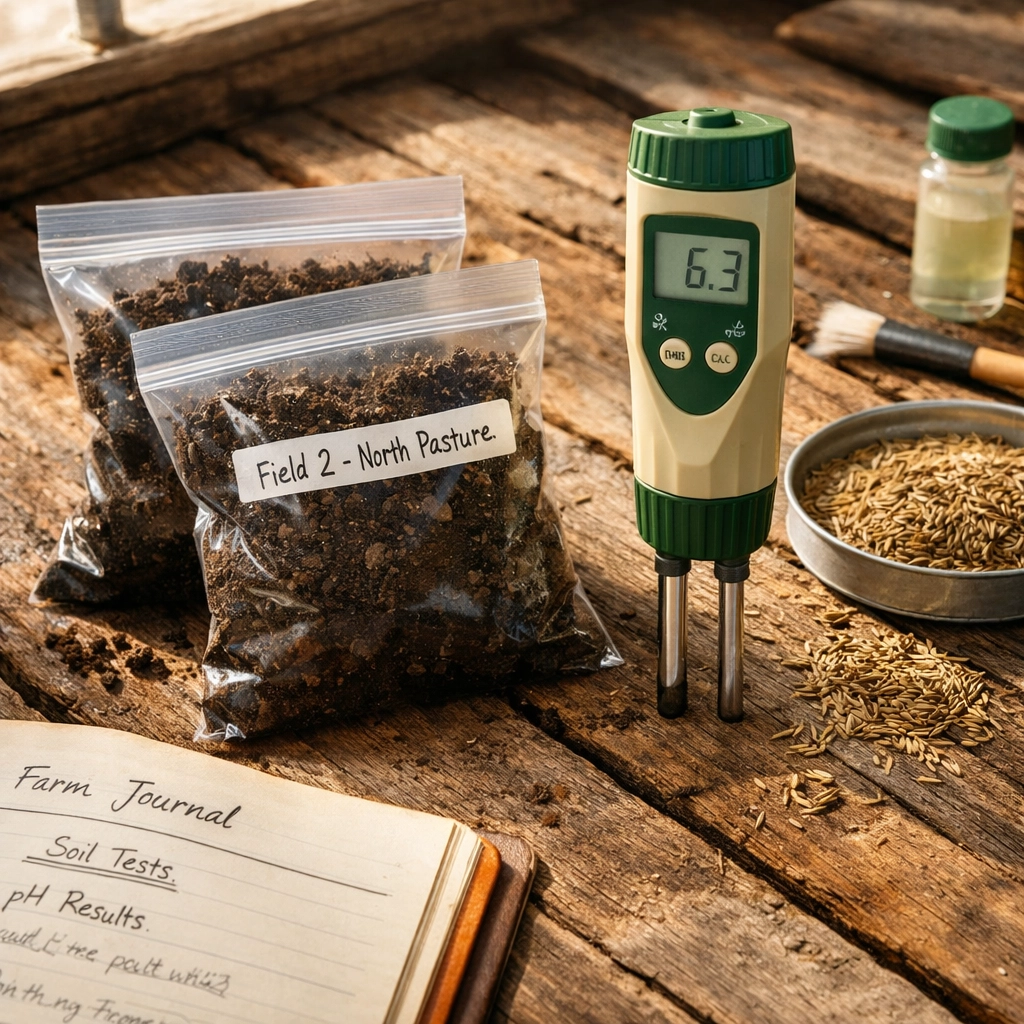
Fertilizing without soil testing is like cooking without tasting. You might get lucky, but you're probably wasting money and potentially creating imbalances. North Carolina soils vary significantly even within the same county. What works on a property in Waxhaw might be completely wrong for land in Mooresville.
The Fix: Contact your local Soil and Water Conservation office or Southern States cooperative. Many offer free or low-cost soil testing that reveals exactly what your soil lacks, and what it doesn't need. Test pH levels alongside nutrient content. North Carolina tends toward acidic soils, and most pasture grasses prefer a pH between 6.0 and 6.5. Without proper pH, even adequate nutrients won't be available to your plants. Retest every 2-3 years, as conditions change with use.
Mistake #3: Managing Grazing Height by Eye Instead of Measurement
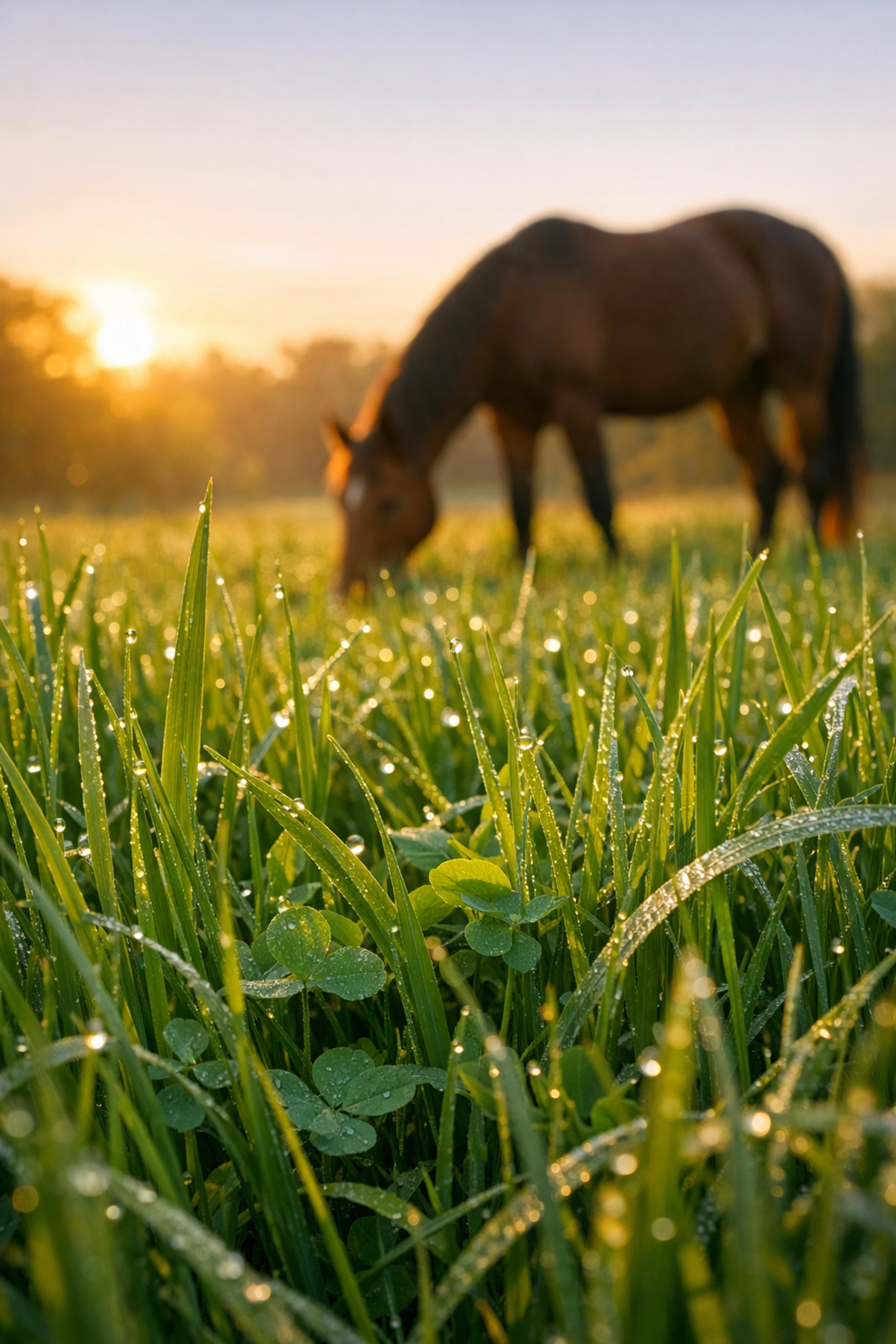
"The grass looked ready" isn't a management strategy. Horses are selective grazers who repeatedly target the most palatable grasses, grazing them close to the ground while ignoring less desirable areas. This pattern depletes the energy reserves in preferred plants, eventually killing them and leaving you with exactly the grasses you don't want.
The Fix: Implement the 6-10 inch rule. Allow pasture to reach 6-10 inches before turning horses out, then rotate them off when it's grazed down to 3-4 inches. This height management maintains forage quality while allowing plants to store enough energy in their roots for regrowth. Those extra inches matter more than you think, they're the difference between a pasture that bounces back and one that declines year over year.
Mistake #4: Treating Rotational Grazing as Optional
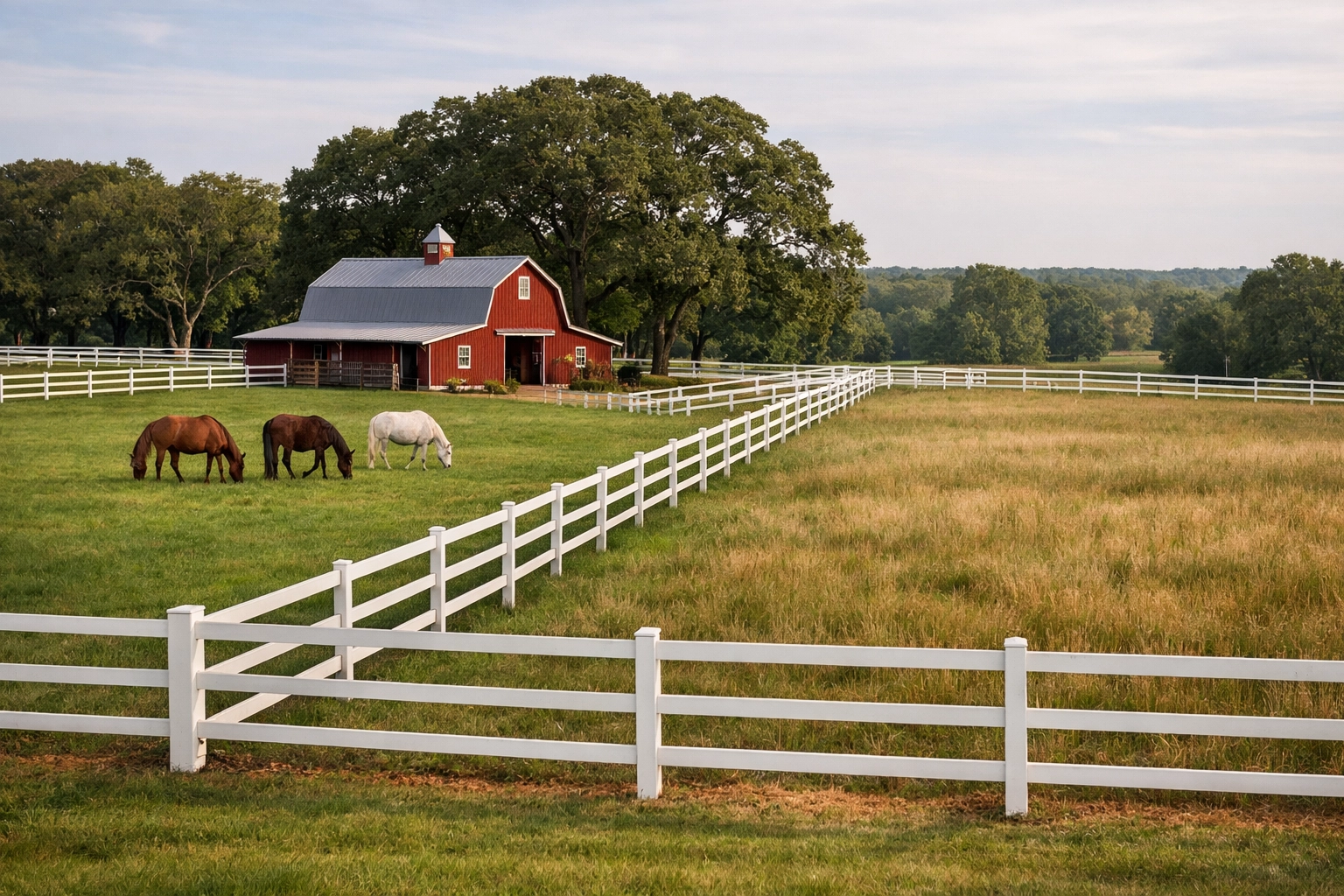
Continuous grazing made sense when horses roamed thousands of acres. On modern horse farms, it's a recipe for pasture destruction. Horses naturally re-graze the same areas, preventing plant recovery and depleting root reserves. Even a basic two-paddock rotation system dramatically improves pasture health compared to continuous access.
The Fix: Start simple. Even dividing one large pasture into two sections and alternating weekly makes a measurable difference. As you become more comfortable with the system, you can add complexity. The goal is rest periods that allow grasses to restore energy reserves through tillering, the process that creates those thick, healthy stands everyone wants. At higher stocking densities, rotational systems shift from helpful to essential. Your pastures need time away from hooves and teeth.
Mistake #5: Fighting Weeds Instead of Understanding Why They're Winning
Herbicides treat symptoms, not causes. When weeds dominate a pasture, they're telling you something about your management. Overgrazing, soil compaction, poor fertility, or inadequate grass competition create opportunities for weeds to establish. Spraying alone won't solve the underlying problem.
The Fix: Build a healthy, competitive stand of desirable grasses and legumes first. Dense, vigorous pasture naturally suppresses most weeds. When herbicides are necessary, consult with local extension agents about products safe for horses, some common pasture herbicides are toxic to equines. Regular mowing at 8-10 inches prevents seed spread while you address the root causes. Remember that bare ground is never the goal; something will grow there, and you want to choose what that something is.
Mistake #6: Inconsistent Mowing and Maintenance Practices
Letting pastures become overgrown, then cutting them severely disrupts growth patterns and encourages uneven stands. Similarly, ignoring manure accumulation creates nitrogen-overloaded patches where horses won't graze, effectively reducing your usable acreage.
The Fix: Bush hog or mow when the tallest grass reaches 8-10 inches. This prevents the development of stemmy, unpalatable growth while encouraging tillering and denser stands. Regular dragging, ideally 2-3 days after rain when manure breaks up easily, distributes nutrients evenly and reduces parasite loads. Consider chain harrowing or pasture aerating annually to prevent soil compaction, especially in high-traffic areas near gates and water sources. Compacted soil can't support healthy root systems, regardless of how much you fertilize.
Mistake #7: Expecting Pasture to Carry Horses Year-Round Without Support
North Carolina's growing season is generous, but it's not twelve months. Expecting pasture to provide adequate nutrition during dormancy, drought, or early spring when growth hasn't begun puts tremendous pressure on your land. Horses kept on inadequate pasture create more damage than horses supplemented with hay in a sacrifice area during low-growth periods.
The Fix: Plan for seasonal supplementation. Calculate how many pounds of hay you'll need during dormant periods and budget accordingly. Establish a sacrifice area, a designated lot where horses spend time when pastures need rest or during excessively wet conditions. This single area takes the wear instead of your entire property. Yes, you'll need to manage that space differently, but the tradeoff is pastures that remain productive for decades instead of years.
The Long View
Pasture management isn't about perfection. It's about understanding the relationship between stocking rate, rest periods, soil health, and grazing pressure. North Carolina gives us natural advantages: adequate rainfall, long growing seasons, and forage varieties that thrive in our climate. But those advantages only work when we manage with intention rather than assumption.
The difference between a property that maintains its value and one that requires expensive restoration comes down to daily decisions made over years. Whether you're managing an existing farm or evaluating equestrian properties, understanding these principles helps you see past the immediate aesthetics to the underlying health of the land.
When you walk a property and see consistent grass height, diverse plant species, minimal bare ground, and horses grazing contentedly across well-maintained pastures, you're seeing the result of someone who got these fundamentals right. That's the property that holds its value, reduces operating costs, and keeps horses healthy.
Want to learn more about finding and managing quality equestrian properties in the Charlotte Metro area? Our team at Carolina Horse Farm Realty understands these details because we live them. Every property we represent gets evaluated through a horseperson's eyes first: from soil quality to pasture potential to long-term sustainability.


