Your pasture is more than green space: it's the foundation of your horse operation. Whether you're managing a 10-acre weekend retreat in Waxhaw or a 100-acre breeding facility in Tryon, the quality of your forage directly impacts your horses' health, your property's resale value, and your monthly feed bill.
North Carolina's unique climate: humid summers, variable rainfall, and red clay soils: creates specific challenges that many horse property owners underestimate. After working with equestrian properties throughout the Charlotte Metro area, I've watched well-intentioned owners make the same costly mistakes year after year.
Here are the seven most common pasture management errors I see on horse farms across the region, and the proven fixes that will transform your land.
Mistake #1: Overstocking Your Pastures
The calculation seems simple: more horses, more riding time. But overstocking is the fastest way to turn productive pasture into a dirt paddock.
North Carolina State University recommends one to two acres of good pasture per horse for year-round grazing. Yet I regularly visit properties in Union County and Mecklenburg County where owners are trying to maintain four or five horses on five acres of tired fescue.
The result? Bare patches, erosion along fence lines, and paddocks that turn to mud after every rain: a familiar sight on our red clay soils.
The Fix: Calculate your true carrying capacity based on your pasture's current condition, not its potential. Never allow grazing below 3-4 inches. Once grass height drops to this point, rotate animals to fresh pasture or supplement with hay. This single change prevents plants from depleting root reserves and gives your soil a chance to recover.
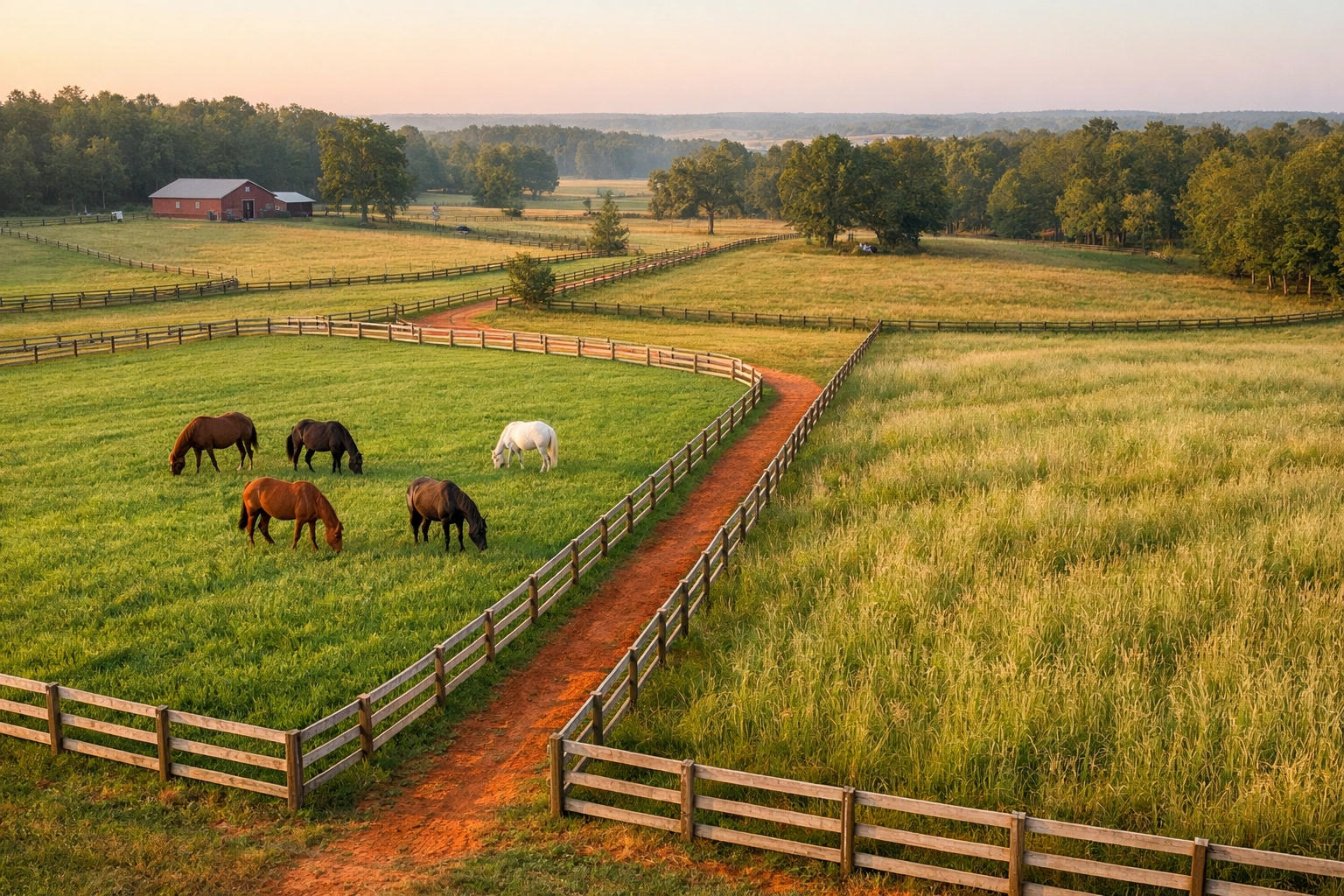
Mistake #2: Continuous Grazing Without Rotation
Horses are selective grazers with precise teeth that repeatedly target the same palatable species. Without rotation, they'll graze favorite plants down to nothing while ignoring others: creating a patchwork of overgrazed "lawns" and rank, mature grasses.
I've walked properties in Weddington and Marvin where half the pasture stands 18 inches tall and untouched, while the other half is grazed to dirt. This isn't just inefficient; it's killing your desirable forage species.
The Fix: Implement a simple two-paddock rotation system. Divide existing pastures with temporary electric fence and alternate horses between sections every 7-10 days. Allow 10-18 days of rest between grazing cycles.
Follow the time-honored principle: "Graze half, leave half." This means allowing animals to graze from 6-8 inches down to 3-4 inches, then moving them. More paddocks provide even better results, but starting with two is infinitely better than continuous grazing.
Mistake #3: Ignoring Weeds Until They Take Over
Bare ground from overgrazing becomes the perfect seedbed for weeds. Every horse property in North Carolina battles something: buttercup, dock, thistle, or invasive brush. But the aggressive approach many owners take: mowing everything to ground level or reaching for herbicide first: often makes the problem worse.
The Fix: The most effective weed control is a healthy stand of competitive grasses and legumes. Address overgrazing first; healthy pastures naturally resist weed pressure.
When mowing is necessary, never mow shorter than 3-4 inches. Clip weed seed heads before they become viable, but preserve enough grass height to shade out new weed germination.
For severe weed infestations, targeted herbicide application may be warranted. Consult with your local cooperative extension office for products approved for horse pastures and proper timing for North Carolina conditions.
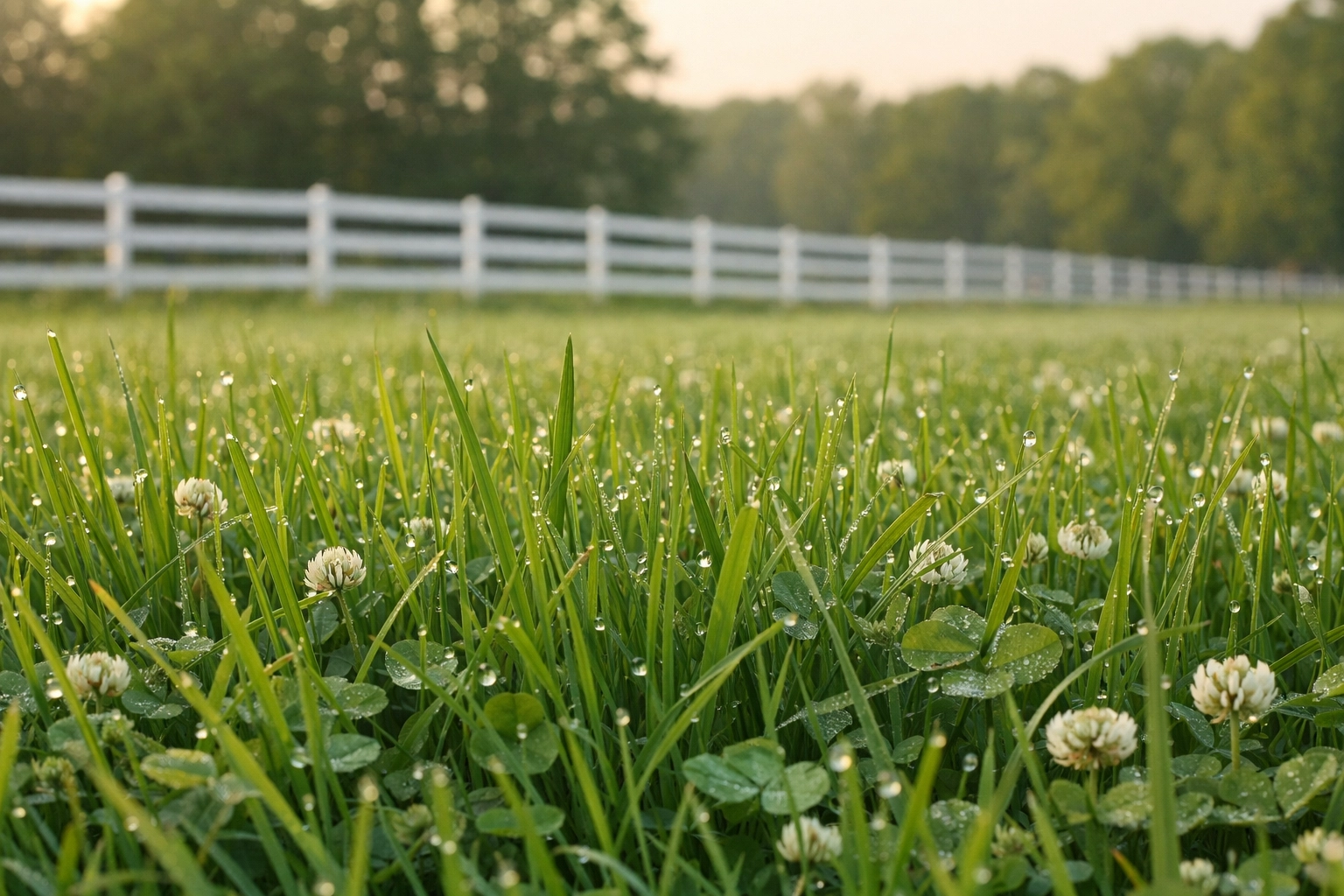
Mistake #4: Skipping Soil Tests and Fertility Management
You wouldn't guess at your horse's mineral needs: why guess at your soil's? Yet many horse property owners apply fertilizer based on what the farm supply store recommends or what the neighbor uses, without knowing their actual nutrient levels.
North Carolina's acidic clay soils typically require lime to raise pH and support optimal forage growth. Without testing, you're flying blind.
The Fix: Test your soil every 2-3 years through your local Soil and Water Conservation district or cooperative extension office. Many offer free or low-cost testing.
Results will specify exactly what your pastures need. For cool-season grasses like fescue: the dominant pasture grass across the Charlotte region: apply 30-50 pounds of nitrogen per acre as recommended by test results. Apply lime according to soil test recommendations, typically in fall or winter.
Proper fertility management isn't just about grass height: it's about nutritional value. Well-fertilized pastures reduce your hay and grain expenses significantly.
Mistake #5: Neglecting Regular Maintenance and Mowing
I've toured horse farms in Huntersville and Mooresville where owners haven't mowed pastures in two years. The result: mature, stemmy grass that horses refuse to eat, scattered manure piles creating nutrient-rich "roughs," and seed heads everywhere.
Unmaintained pastures waste your most valuable resource: the land itself.
The Fix: Mow pastures when the tallest grass reaches 8-10 inches. This accomplishes three goals: it promotes even, vegetative growth; controls weeds before they seed; and spreads manure more effectively.
After mowing, drag pastures to break up and distribute manure piles. This returns nutrients to the soil and reduces parasite pressure.
Never mow below 3-4 inches: scalping pastures damages plants and exposes soil to erosion and weed germination.
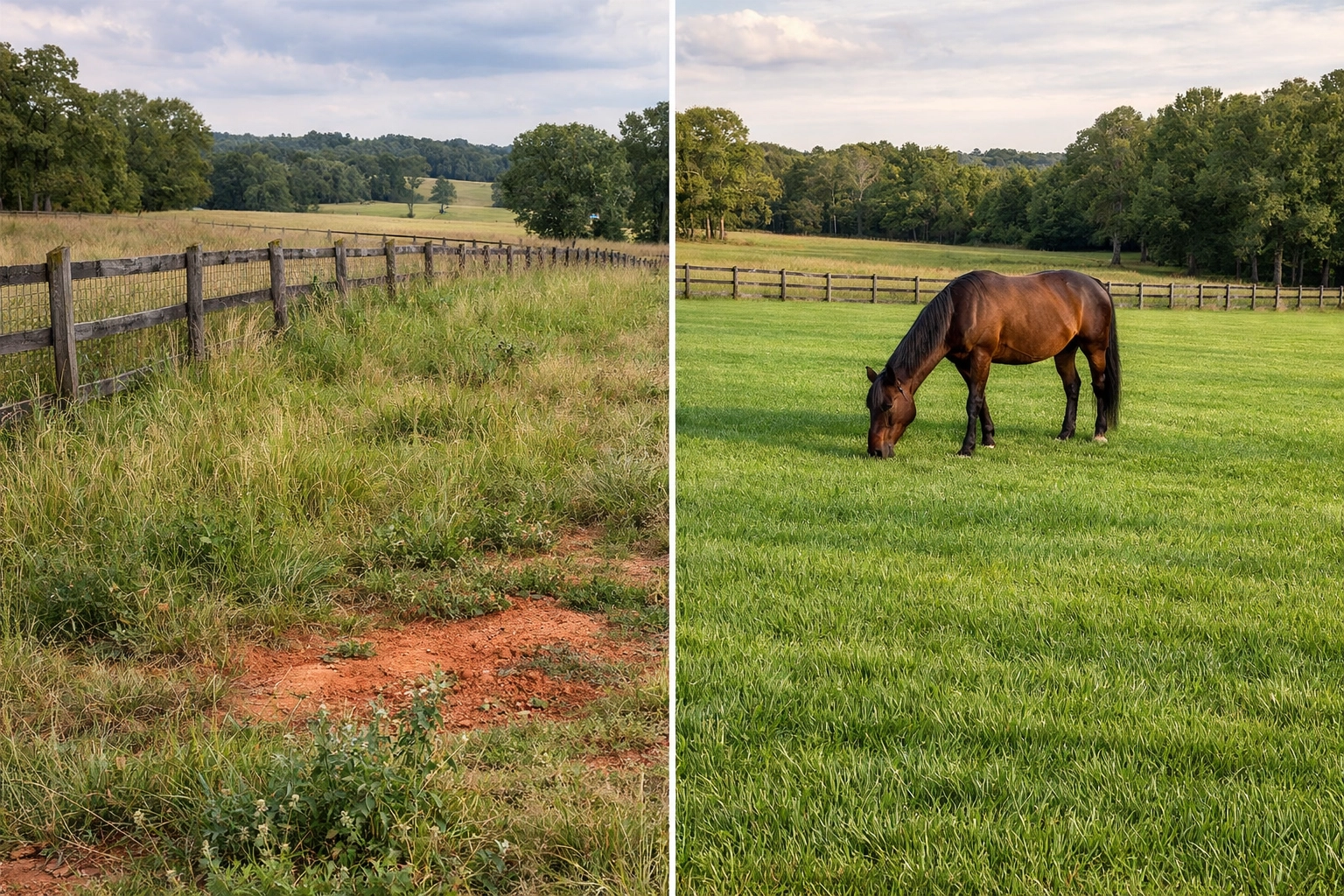
Mistake #6: Grazing New Pastures Too Soon
You've invested in pasture renovation: new seed, lime, fertilizer. Naturally, you want to see results and get horses back on that grass. But turning horses out before seedlings are established destroys months of work and wastes money.
The Fix: Allow newly seeded pastures to reach 6-8 inches before introducing any grazing pressure. For overseeded pastures where you've added clover or other legumes to existing grass, keep horses grazing the existing grass below 4 inches for the first month. This maximizes sunlight reaching new seedlings.
First-grazing should be brief and carefully managed: no more than a few days before rotating to another paddock. Think of it as "training" both the new plants and your horses to the rotation system.
Patience during establishment pays dividends for years. Rush this step, and you'll be reseeding again next year.
Mistake #7: Failing to Monitor Pasture Health Regularly
Poor pasture management often goes undetected until problems become severe. By the time you notice widespread bare patches or significant weed pressure, you're looking at expensive renovation rather than simple maintenance.
The Fix: Conduct weekly pasture walks during the growing season. Use the step-point check: walk your pasture and stop every 20 paces. Look down at what your boot is pointing at. Is it desirable forage or weeds? Bare ground or healthy grass?
This simple visual evaluation identifies problems early: before they require aggressive intervention: and guides your rotation decisions.
Watch for early warning signs: bare patches developing along fence lines, horses grazing the same areas repeatedly, or increasing weed pressure in specific paddocks. These indicators tell you when to adjust stocking rates, rotation timing, or management practices.
Regular monitoring transforms pasture management from reactive crisis control to proactive stewardship.
Building Long-Term Pasture Health
Quality pasture management isn't about perfection: it's about consistent attention to fundamentals. The horse properties that maintain beautiful, productive pastures year after year share one thing in common: owners who understand that land stewardship is inseparable from horse care.
Whether you're currently managing pastures on your existing horse farm or evaluating equestrian properties throughout the Charlotte Metro area, these seven principles apply universally. The farms that hold their value and attract serious buyers when the time comes are invariably those with healthy, well-managed pastures.
If you're searching for a horse property with quality pasture infrastructure already in place: or need guidance on evaluating pasture potential during your property search: that's where our equestrian-focused expertise makes the difference. We know what to look for because we live this life ourselves.
Ready to talk about your horse property goals? Reach out to our team for a conversation about what matters most to you and your horses.