When you've spent years mucking stalls at dawn, trailering to shows, and managing everything from colic episodes to winter blanketing schedules, you develop specific opinions about what makes a barn work. High-end doesn't mean gold-plated feed buckets: it means thoughtful engineering that keeps horses healthy, reduces daily labor, and stands up to North Carolina's humidity, afternoon thunderstorms, and everything else our climate throws at us.
If you're searching for equestrian properties in Charlotte or considering building custom stables on land you already own, understanding these essentials will help you recognize quality construction versus expensive mistakes.
Site Engineering Comes Before Anything Else
The foundation of excellent stable design starts underground. Serious equestrians evaluate drainage patterns, soil composition, and natural topography before placing a single post. In the Charlotte metro area, where clay soil predominates and summer storms can drop inches of rain in hours, poor site engineering creates chronic mud, standing water, and expensive remediation.
High-end properties feature professionally graded building sites with swales, French drains, or subsurface drainage systems that move water away from barn foundations and high-traffic areas. The barn location considers prevailing winds for natural ventilation, sun exposure for winter warmth and summer shade, and logical flow between turnout areas, riding arenas, and wash stalls.
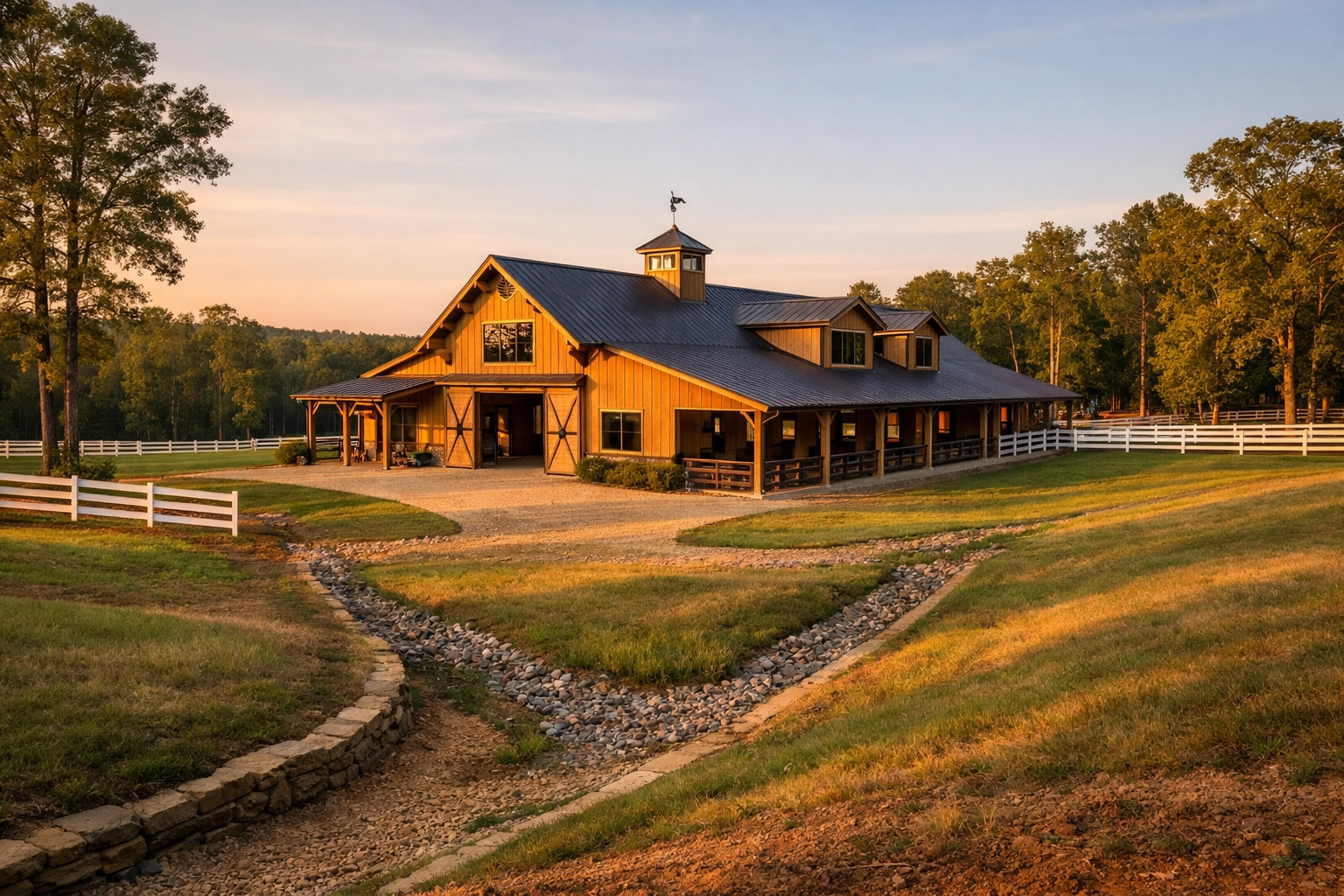
Properties in developments like Cheval in Mint Hill or throughout Waxhaw and Weddington often include engineered pad sites specifically designated for barn construction, with utility access already planned and environmental considerations addressed during development permitting.
Ventilation Systems That Actually Work Year-Round
North Carolina's humid summers and variable winters demand ventilation systems that adapt. High-end stable design incorporates multiple ventilation strategies rather than relying solely on open doors or ridge vents.
Serious equestrians look for:
Cupolas with functional louvers positioned along the ridge line to create natural thermal lift, pulling hot air up and out while drawing cooler air through lower openings
Dutch doors or grilled stall fronts that allow individual stall ventilation adjustment without sacrificing security
Ceiling height of at least 12 feet in aisles and 10 feet in stalls to provide adequate air volume and reduce heat buildup
Cross-ventilation design where barn orientation and window placement create natural airflow patterns without creating drafts directly on horses
Covered overhangs extending at least four feet beyond the roofline to allow windows and doors to remain open during rain
Climate control isn't about air conditioning: though some high-end Charlotte facilities do incorporate fans or misting systems in wash stalls and grooming areas. It's about designing airflow that keeps respiratory health optimal while horses remain comfortable during temperature extremes.
Stall Dimensions and Materials Built for Longevity
Standard 12×12 stalls suffice for most horses, but serious equestrians investing in high-end facilities often specify 12×14 or larger for foaling stalls, stallions, or horses that spend extended time inside. The materials defining those spaces matter significantly.
Premium stable construction in the Charlotte area features:
Tongue-and-groove hardwood or composite stall fronts with rounded edges and flush hardware that eliminates catch points
Powder-coated steel grills rather than wood bars that horses can chew, break, or get caught in
Interlocking rubber or eva foam mats over compacted stone dust bases that provide cushioning, insulation, and easier maintenance than concrete or bare dirt
Kickboards or lower walls of at least 4 feet in solid material (lumber or metal) to contain bedding and protect walls from damage
Stall doors with centered latches positioned where horses can't reach them, with smooth closure mechanisms that won't pinch fingers or catch lead ropes
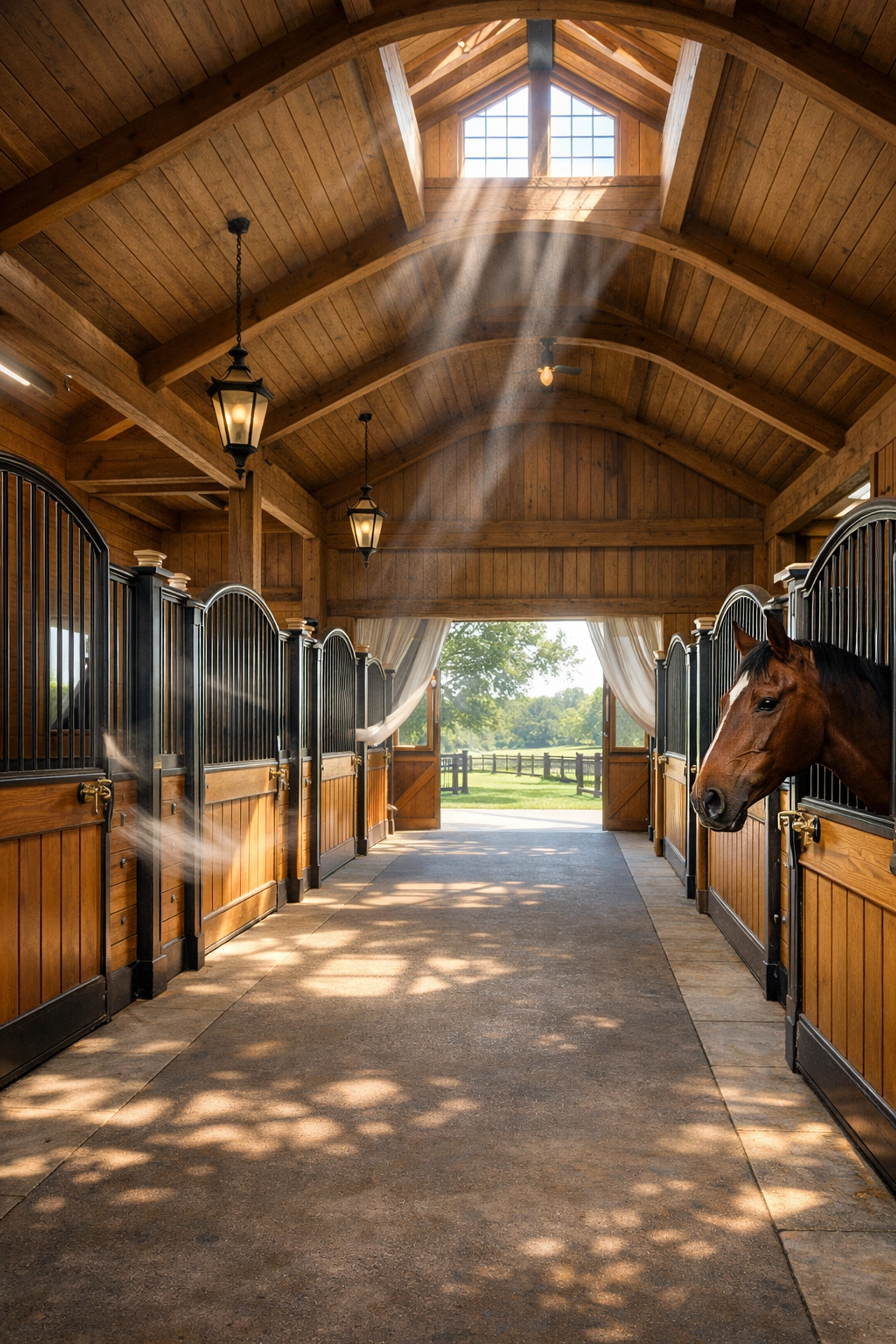
Corner feed and water buckets installed at chest height reduce contamination and create safer stall environments than floor-level buckets horses can step in or tip over.
Wash Stalls and Grooming Areas That Function Daily
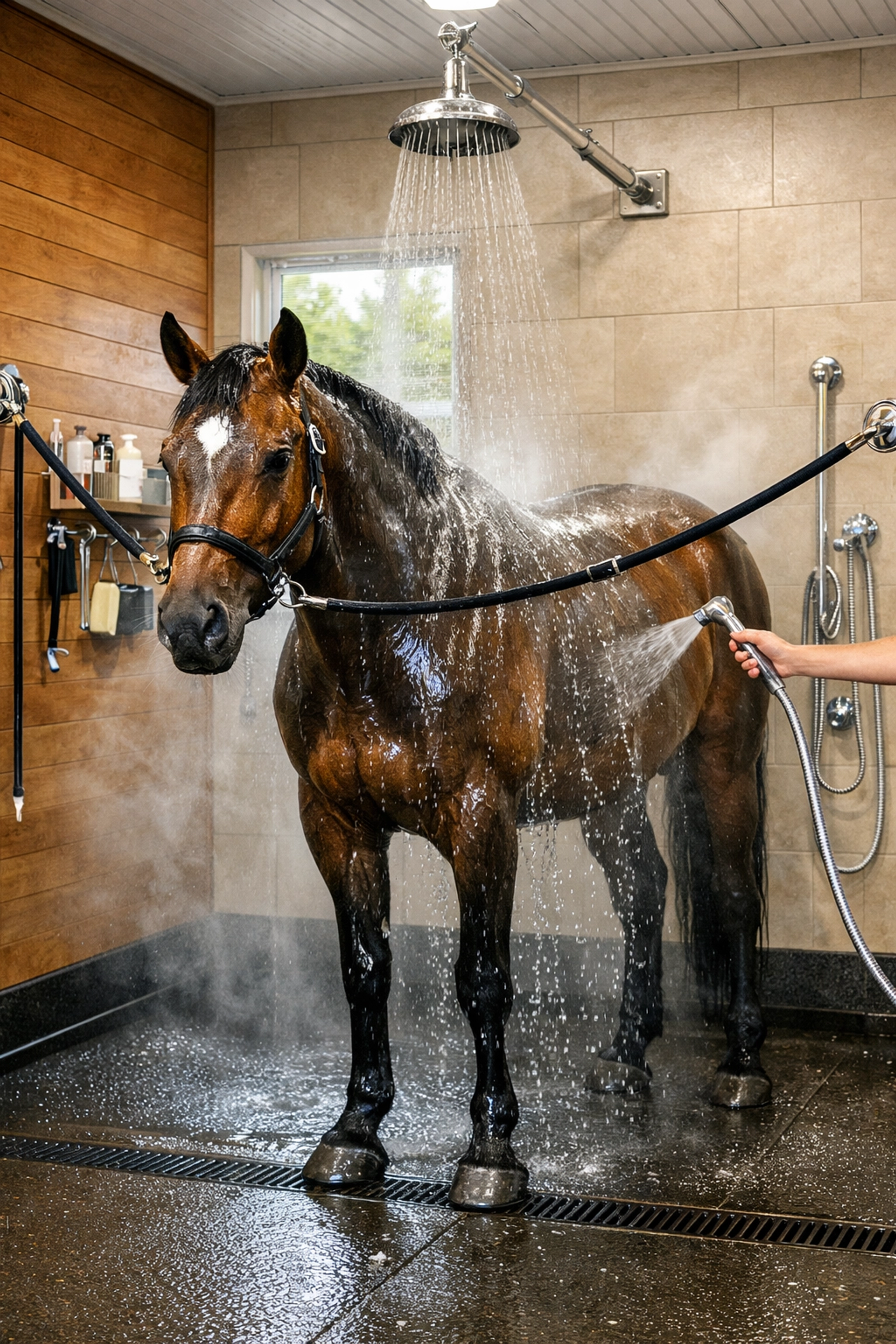
Anyone who's bathed horses in a dirt aisle with a garden hose understands the value of proper wash facilities. High-end stable design includes dedicated wash stalls with hot and cold water, non-slip flooring, and drainage that actually works.
Essential features include:
Textured rubber or concrete flooring with adequate slope (minimum 2%) toward drains sized to handle hair, bedding, and debris without clogging
Cross-ties anchored to walls or posts rather than overhead beams, positioned at appropriate height for various horse sizes
Hot water heaters sized adequately for multiple back-to-back baths without running cold
Multiple water sources including overhead spray attachments and standard hose connections
Natural light from windows or skylights that allows proper visualization during grooming and veterinary work
Adjacent grooming areas benefit from electrical outlets for clippers and vacuums, storage for grooming supplies, and mounting blocks or step stools within easy reach.
Tack Room Security and Climate Control
Quality tack represents significant investment: custom saddles alone run $4,000 to $8,000, and complete wardrobes for competitive horses easily exceed $15,000. High-end facilities protect these investments with climate-controlled tack rooms featuring dehumidification systems that combat North Carolina humidity and prevent mold growth on leather goods.
Serious equestrians look for tack rooms with:
Exterior-grade locks and reinforced doors with solid cores rather than hollow construction
Individual saddle racks with proper spacing and support rather than generic wall hooks
Organized bridle storage with individual hangers that maintain shape
Climate control systems that maintain 40-60% relative humidity regardless of outdoor conditions
Adequate square footage for the number of horses in training: minimum 100 square feet for 4-6 horses, with proportional increases for larger programs
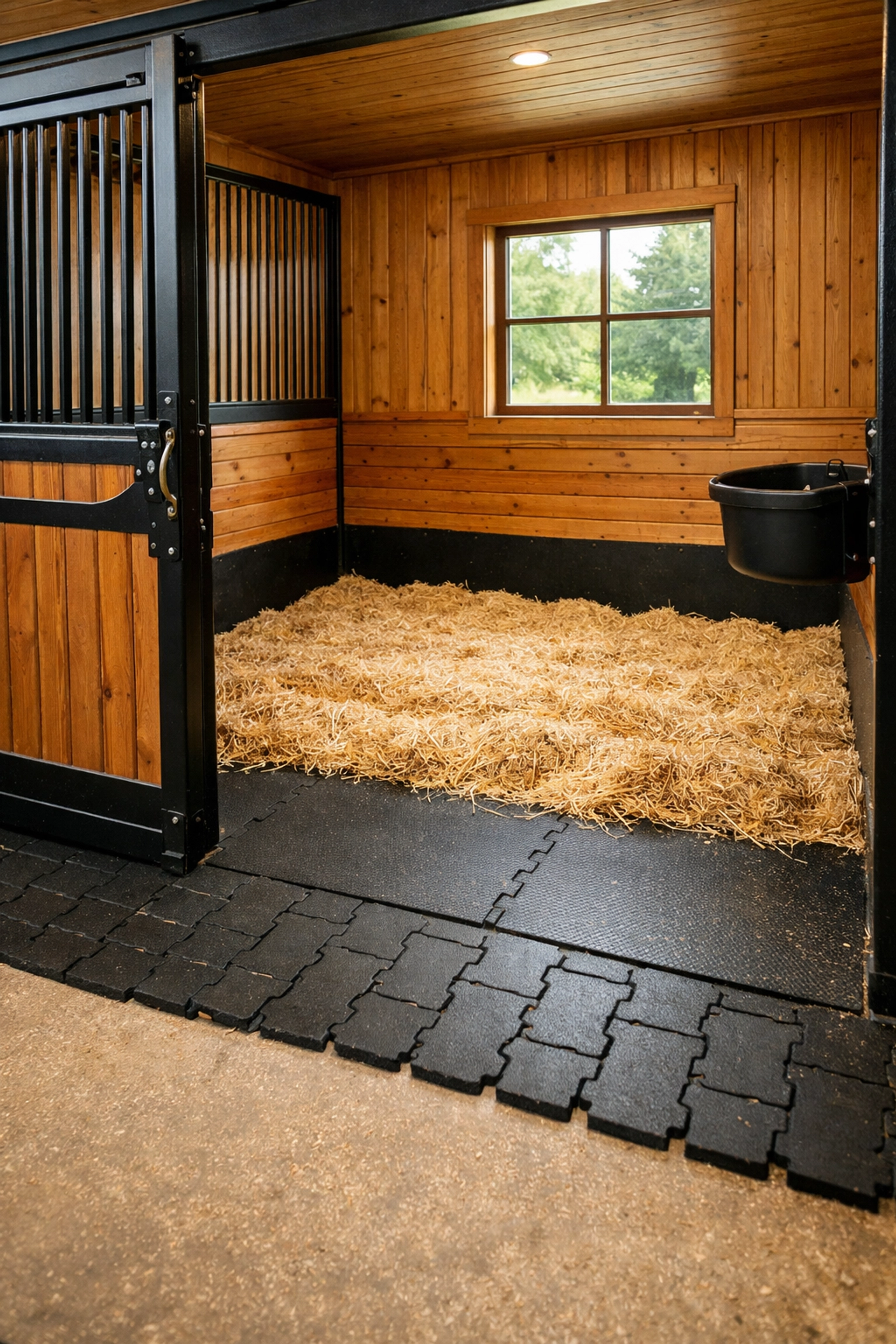
Windows positioned to allow equipment monitoring from barn aisles provide security oversight without requiring separate camera systems, though many high-end facilities incorporate both.
Aisle Width and Traffic Flow
Narrow barn aisles create safety hazards and operational inefficiency. High-end stable design specifies minimum 12-foot aisle width: preferably 14 feet: that allows horses to pass each other safely, tractors to access stalls for deep cleaning, and handlers to work without crowding.
Center aisle barns benefit from doors at both ends sized for equipment access (minimum 10 feet wide) and positioned to create natural ventilation corridors. Concrete aisles should include textured finishes or rubber pavers that provide traction when wet, and the ceiling height throughout aisles should match stall requirements at 12 feet minimum.
Feed Storage and Rodent Prevention
Proper feed storage protects expensive grain from spoilage, contamination, and pest damage. High-end Charlotte area facilities include dedicated feed rooms separate from tack storage, with sealed containers, climate control, and construction details that exclude rodents.
Quality feed rooms feature:
Metal or heavy-duty plastic bins with locking lids rather than bags left on pallets
Sealed door sweeps and wall penetrations that eliminate rodent entry points
Concrete flooring rather than wood that rodents can chew through
Ventilation that prevents moisture buildup without allowing pest access
Adequate capacity for 2-4 weeks of feed inventory with organized storage for supplements and medications
The Charlotte Equestrian Property Advantage
The Charlotte metro area offers unique advantages for serious equestrians investing in high-end stable facilities. Properties throughout Waxhaw, Weddington, Marvin, and into York County, SC provide adequate acreage for custom barn construction while maintaining reasonable proximity to quality veterinary services, feed suppliers, and competition venues.
Unlike regions where equestrian infrastructure requires extensive travel, Charlotte-area horse owners access specialized farriers, veterinarians, and trainers within 30-minute drives while enjoying rural property settings with genuine acreage and privacy.
Finding Properties with Existing High-End Facilities
Building custom stables requires significant investment and time: often 18-24 months from concept to completion. Purchasing existing equestrian properties with thoughtfully designed facilities allows immediate operation while potentially offering better value than ground-up construction in today's building cost environment.
When evaluating existing barns, serious equestrians prioritize the engineering fundamentals discussed above: site drainage, ventilation systems, materials quality: over cosmetic finishes that generate visual appeal but don't affect daily functionality or horse welfare.
Properties featuring custom-engineered stables rather than converted pole barns or agricultural buildings demonstrate previous owners who understood equestrian-specific requirements and invested appropriately.
Moving Forward With Your Search
High-end stable design represents the intersection of equestrian knowledge, construction expertise, and site-specific engineering. Whether you're searching for turnkey equestrian properties or land suitable for custom development, understanding these essentials helps you evaluate quality and recognize value.
Explore our current listings of equestrian properties throughout the Charlotte metro area, or contact our team to discuss your specific stable requirements and property goals. We understand the difference between barns that look impressive and facilities that actually work for serious horse programs.