

There's a particular kind of morning that only happens on a well-situated horse farm: the one where you step out with your coffee, the horses are already at the fence line nickering for breakfast, and the horizon is just starting to turn gold over your back pastures. If you're searching for that life in the Charlotte Metro area, Waxhaw deserves your attention.
This historic Union County town has quietly become one of the most compelling equestrian markets in North Carolina, offering the rare combination of established horse infrastructure, reasonable acreage prices, and genuine small-town character that hasn't been paved over by development. Let's walk through what makes Waxhaw work for horse people: and what you need to know before you buy.
The Waxhaw Market: Real Numbers, Real Inventory
The equestrian property market in Waxhaw is active and accessible. As of early 2026, 17 to 43 horse-specific properties are available depending on search parameters, with average listing prices ranging from $539,000 to $570,917. More importantly for land buyers, the average cost per acre sits between $50,005 and $51,660: a significant value proposition compared to neighboring Mecklenburg County.
These aren't theoretical numbers. Current inventory includes properties distributed across Union County on roads like Lancaster Highway, Walkup Road, Richardson King Road, and Oxfordshire Road: areas where horses have been kept for generations, not HOA developments trying to accommodate them as an afterthought.
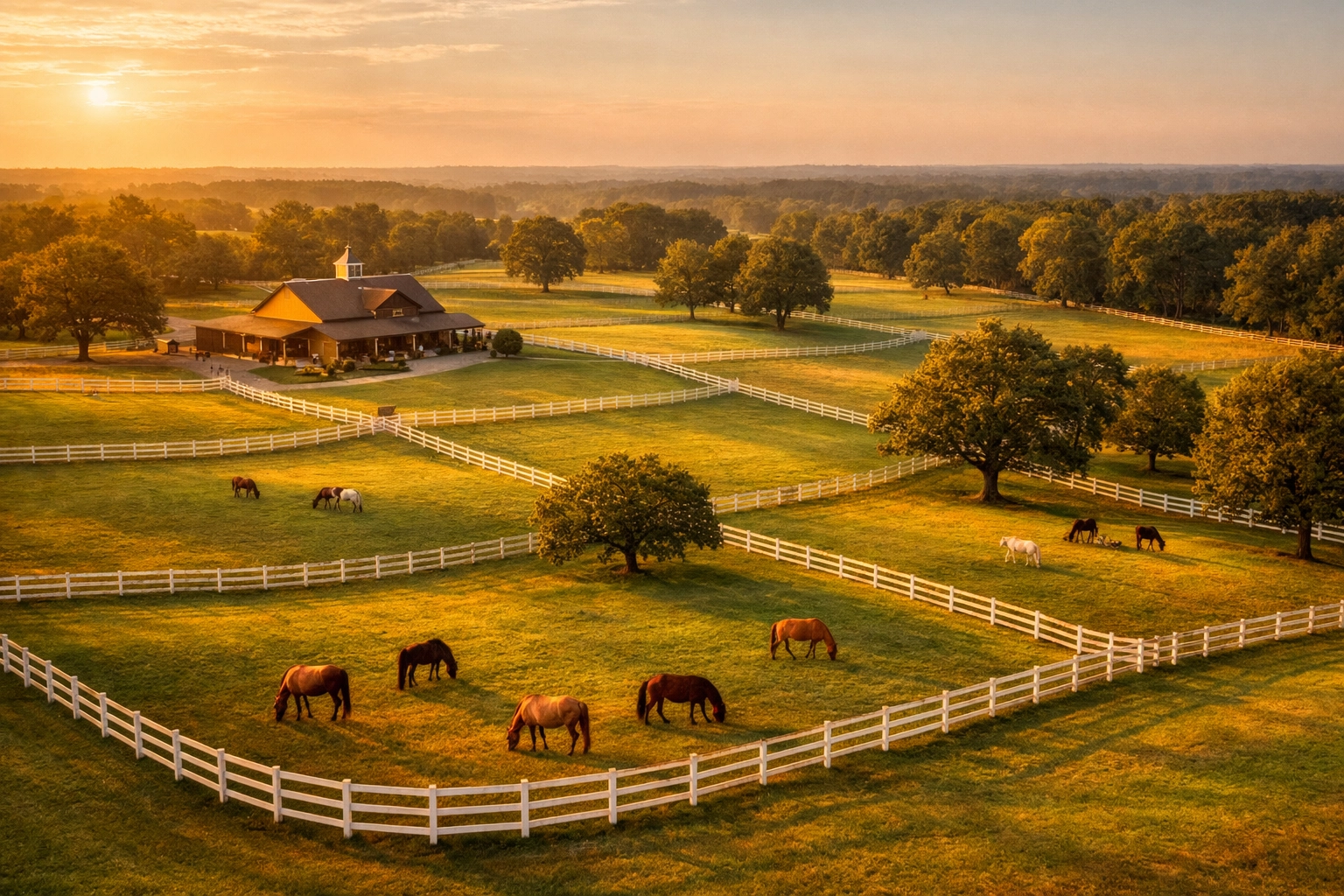
Why Waxhaw Works for Working Horse Properties
Geography matters when you're hauling hay, managing manure, and planning turnout schedules. Waxhaw sits at a practical intersection of accessibility and genuine rural character. You're roughly 30 minutes from uptown Charlotte when you need urban amenities, but you're surrounded by properties where people actually use their barns daily, not just for weekend aesthetics.
The soil here: rolling Piedmont terrain with a mix of clay and loam: supports decent pasture management with proper rotation and lime applications. You're not fighting the sandy soils of the Sandhills or the red clay hardpan of some Charlotte suburbs. The climate allows for year-round turnout with adequate shelter, and most properties have established tree lines that provide natural windbreaks and shade.
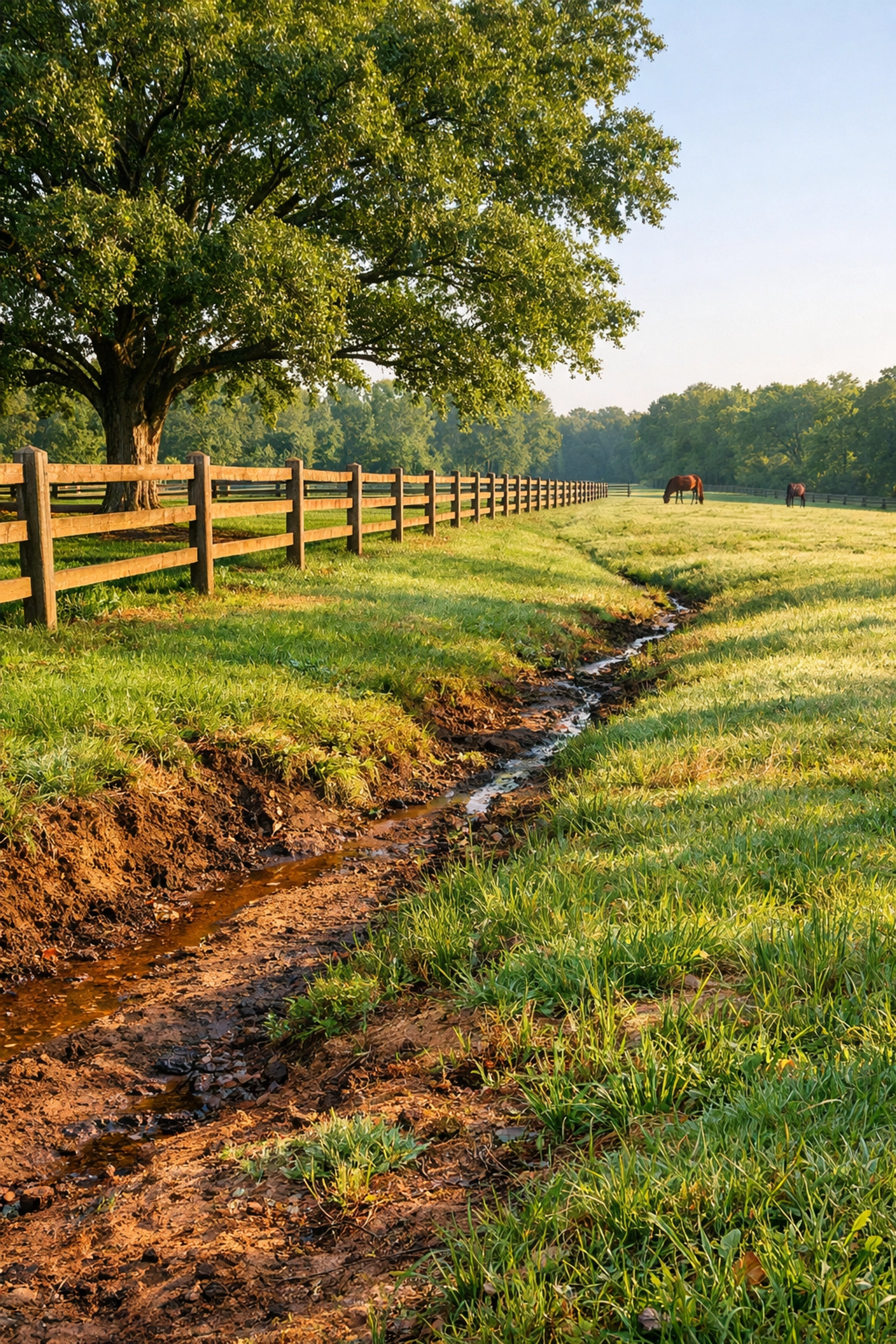
Water access is generally reliable through county connections or well systems, though any serious buyer should verify water table depth and quality before closing. The elevation changes create natural drainage patterns, but that same topography means you'll want to evaluate each property's specific grading around barn areas and run-ins.
What's Actually Available: Property Types and Features
Waxhaw's current inventory ranges from compact 5-acre starter farms to established 20+ acre training facilities. A representative example is the Break Away Farm listing: a 10+ acre property featuring a 3,771 square foot main residence, four-stall barn with hay loft, four separate pastures with rotation capability, a run-in shed, four-bay equipment storage, and a lighted 50' x 125' arena with irrigation.
That level of infrastructure matters. You're not buying raw land and spending three years building out basic necessities. Many Waxhaw properties come with:
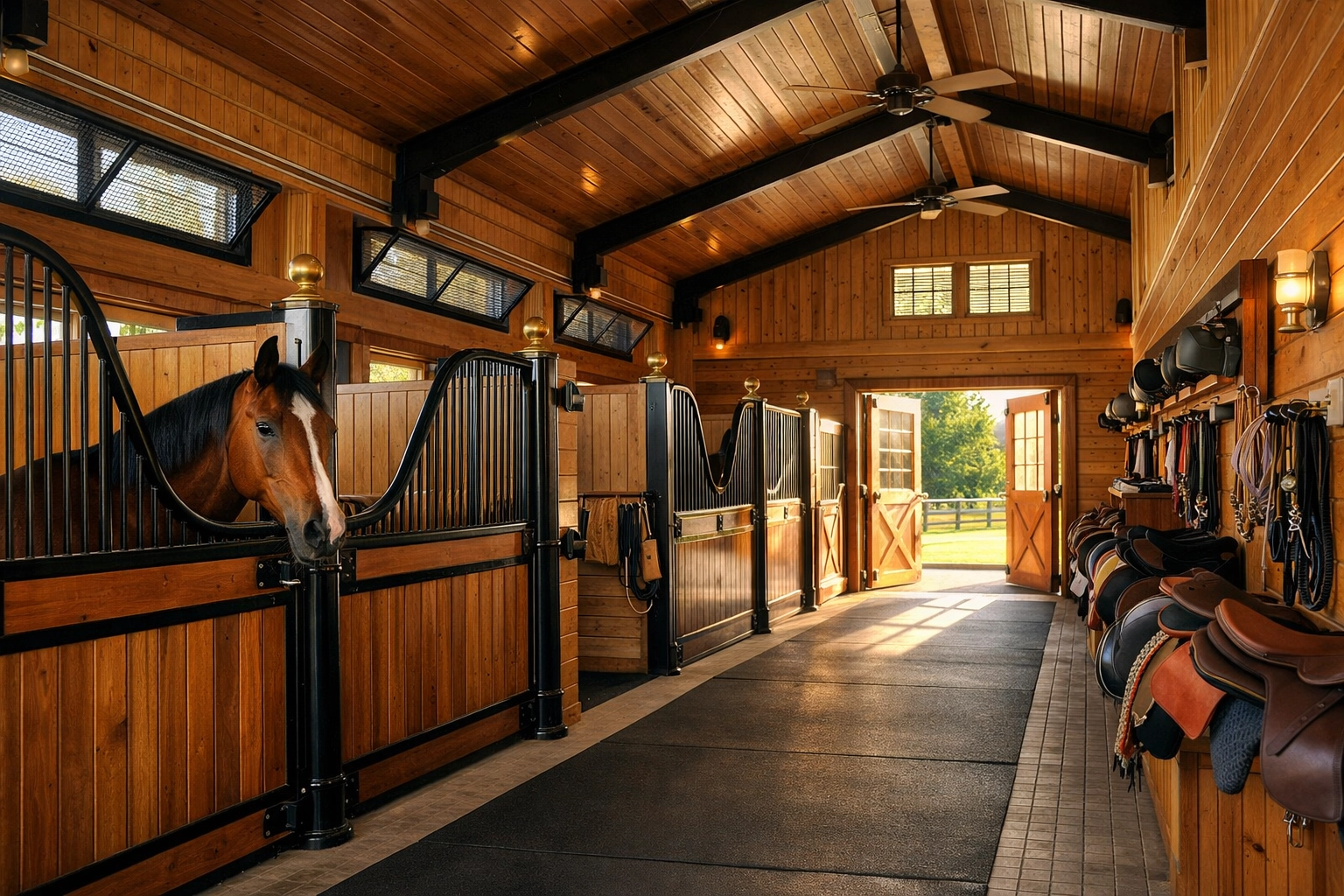
Functional barn systems with proper ventilation, matted stalls, and hay storage that actually keeps hay dry through Carolina humidity. Not showcase barns with crystal chandeliers and no cross-ventilation.
Established fencing that's been maintained and tested by actual horses, not installed by a general contractor who's never watched a gelding test every rail for weakness.
Pasture rotation capacity with separate paddocks that allow rest and recovery, not a single large field that turns to mud by November.
Equipment storage adequate for tractors, manure spreaders, and the accumulated tools that come with property maintenance.
The Trail Access Advantage
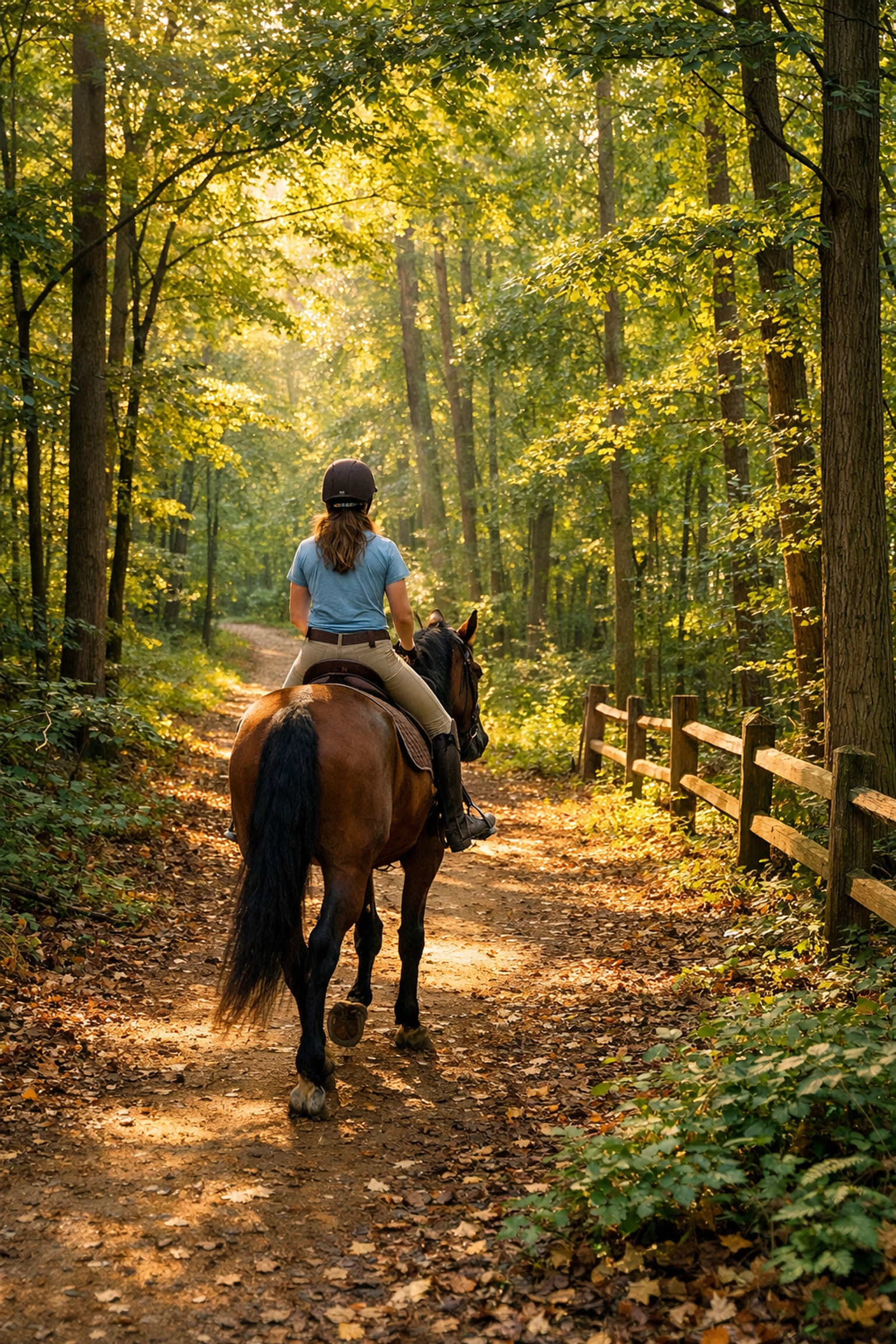
One of Waxhaw's strongest assets often gets buried in listing descriptions: legitimate riding trail access. The Mineral Springs Greenway provides maintained trails without trailering off property. Nearby Cane Creek Park encompasses 1,100 acres with extensive trail systems open to equestrians: not a token half-mile loop, but actual distance riding opportunities.
For hunters, eventers, or pleasure riders who understand that arena work alone creates sour horses, this access matters tremendously. The ability to hack out for conditioning work, expose young horses to varied terrain, or simply give your mare a mental break changes your daily training program.
Historical Context Meets Modern Infrastructure
Waxhaw carries genuine historical weight: this was the homeland of the Waxhaws indigenous tribe and the birthplace region of President Andrew Jackson. That historical continuity means something practical: the area's infrastructure evolved to support agricultural use, not residential subdivisions retrofitted with horse "amenities."
Road access can handle trailers without white-knuckle navigation through narrow subdivision streets. Most properties connect to county utilities or have established well and septic systems designed for rural use. Neighboring properties tend to be owned by people who understand that horses make noise at 5 AM and manure spreaders run on Saturday mornings.
Essential Considerations Before You Buy
Even in a strong market like Waxhaw, informed buyers protect themselves by evaluating:
Zoning verification: Confirm the property's agricultural zoning status and any restrictions on commercial equestrian use if you're planning training, boarding, or lesson programs. Union County regulations differ from Mecklenburg County, and assumptions cost money.
Soil testing: Before you plan that new arena or additional pasture seeding, test the soil. Evaluate drainage patterns after rain events. Walk the entire property line to identify low spots that hold water and high ground suitable for construction.
Barn condition assessment: Bring someone who understands equine facility management to evaluate barn structure, electrical systems, water lines, and whether that "charming older barn" needs $40,000 in foundation work.
Pasture carrying capacity: Calculate realistic stocking rates based on actual grass growth, not theoretical acreage. Four acres in Waxhaw might support two horses comfortably with proper rotation, or it might support one horse poorly if the soil is compromised and the previous owner overgrazed.
Access and easements: Verify deeded access if the property sits behind another parcel. Confirm no restrictive easements limit your intended use. Review any shared well or driveway agreements in writing.
Working With Equestrian-Specialized Representation
The Waxhaw market includes realtors who genuinely understand horse properties: professionals who know the difference between a run-in shed and a loafing shed, who can evaluate barn ventilation by walking through once, and who won't waste your time showing you properties with inadequate trailer access.
Specialized representation matters because these transactions involve considerations beyond standard residential real estate: manure management regulations, barn insurance requirements, agricultural tax classifications, and the practical logistics of moving horses during closing transitions.
The Practical Path Forward
If Waxhaw fits your geographic requirements and price range, the logical next step involves boots-on-the-ground evaluation. Schedule property visits during wet weather to assess drainage. Bring your trainer or barn manager to evaluate facility layouts. Talk to neighbors about local farriers, veterinarians, and feed delivery options.
Drive the routes you'd actually use for regular errands, vet calls, and competition trailering. Evaluate whether the property's daily reality matches your program's actual needs: not the romanticized version of horse ownership, but the 6 AM feeding schedule, the muddy February turnout, and the August afternoon when the arena footing is too hard to work safely.
The Waxhaw horse farm market offers genuine opportunity for buyers who approach it with clear-eyed evaluation and horse-first priorities. The inventory exists, the infrastructure is established, and the community supports equestrian use as a legitimate agricultural practice, not a hobby to be tolerated.
For buyers ready to move beyond the research phase into active property evaluation, view current Waxhaw listings or connect with our team to discuss your specific requirements. We work with horse people looking for properties that function as working farms, not showpieces: and we understand the difference.


