Buying a horse farm in the Charlotte Metro area is an emotional journey. You aren't just buying a house; you’re buying a lifestyle, a workspace, and a sanctuary for your horses. However, we often see buyers fall in love with a scenic view only to realize later that the land doesn't legally allow their third horse or the "perfect" barn is a sweatbox during a humid North Carolina July.
At Carolina Horse Farm Realty, we specialize in horse farms and equestrian estates across the Charlotte Metro area, helping you navigate the unique complexities of North Carolina land use. Here are seven common mistakes buyers make when searching for horse farms for sale in Charlotte and how our team helps you fix them before you sign on the dotted line.
1. Assuming "Rural" Means "Horse-Friendly"
One of the most frequent mistakes is assuming that because a property is in a rural-looking area like Weddington or Davidson, you can keep as many horses as you want. Many counties around Charlotte have strict zoning regulations and livestock-per-acre requirements.
- The Statistic: In many parts of the Charlotte Metro area, zoning may require a minimum of 2 acres for the first horse and an additional acre for each subsequent animal.
- The Fix: Our team pulls the specific zoning designation for every property we show. We verify the "animal units" allowed and check for any conditional use permits required for commercial activities like boarding or lessons.
2. Underestimating the "Carolina Red Clay"
North Carolina is famous for its red clay soil. While beautiful, it poses a significant challenge for horse owners. Clay holds water, meaning without proper management, your dream farm can quickly turn into a mud-caked nightmare.

- The Problem: Poor drainage leads to chronic mud, which causes hoof rot, scratches, and soil erosion.
- The Fix: When touring horse farms for sale, we look for properties with natural elevation or existing drainage infrastructure like French drains and gravel-lined gates. We understand the unique requirements of managing NC pastures and can advise on soil testing and pasture renovation.
3. Prioritizing the Human House Over the Horse Barn
It’s easy to be distracted by a gourmet kitchen or a resort-style pool. However, if the barn isn't functional, your daily life will suffer. We’ve seen $2 million estates with barns that have zero ventilation or aisles so narrow you can’t safely pass a horse.

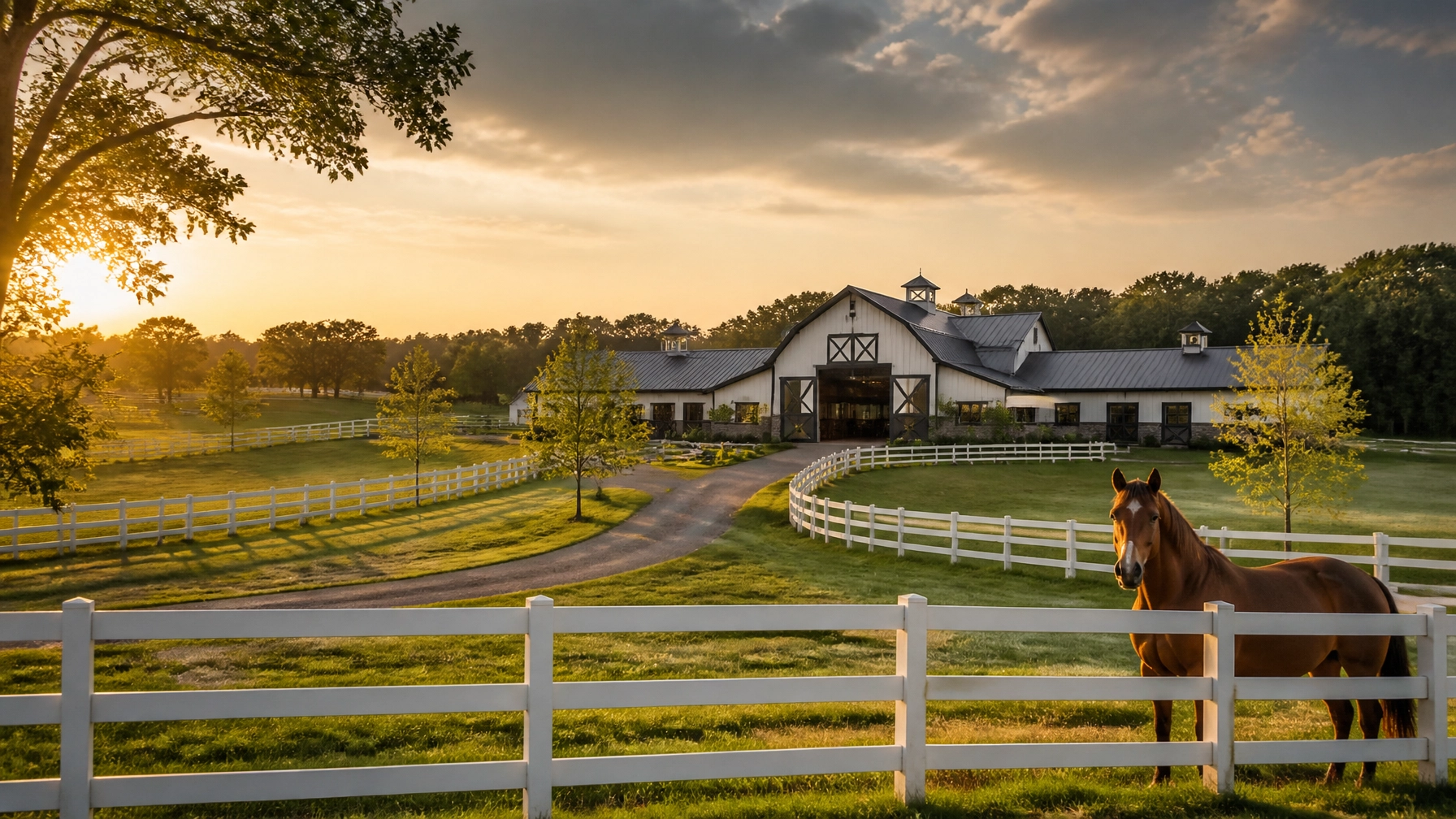
- The Requirement: In the South, ventilation is king. You need wide aisles, high ceilings, and large monitors or cupolas to pull heat out of the barn.
- The Fix: We prioritize the "horse-first" perspective. We evaluate the barn’s structural integrity, electrical safety, and layout efficiency before we even step inside the house. If you are looking at equestrian properties in Charlotte NC, ensure the barn is built for the humidity, not just for looks.
4. Misunderstanding Community Constraints
There is a big difference between a standalone farm and an equestrian community. Some buyers look at neighborhoods like Chapel Cove or Summit Farms and assume they offer the same freedoms.
- The Reality: While The Preserve at Summit Farms is designed with an "agrihood" feel and plenty of open space, other high-end communities like Chapel Cove may have strict HOAs that prohibit livestock or outbuildings.
- The Fix: We help you decode the CC&Rs (Covenants, Conditions, and Restrictions). We know which communities, like Cheval in Mint Hill or the areas around Tryon, are truly equestrian-centric and which are residential neighborhoods that happen to have a rural aesthetic.
5. Ignoring Trailer Access and Logistics
You found the perfect 10-acre lot at the end of a winding wooded drive. But can you get a 4-horse gooseneck trailer in and out? We’ve seen many buyers get stuck, literally: because they didn't account for the turning radius of a large rig.

- The Detail: A driveway needs to be wide enough for heavy equipment and hay deliveries, with a safe turnaround area that doesn't involve backing a trailer 500 feet through trees.
- The Fix: During our property tours, we "walk the logistics." We look at gate widths, driveway grading, and access points for emergency vets and hay suppliers.
6. Neglecting Pasture Quality and Carrying Capacity
A 15-acre property doesn't always mean 15 acres of grazing. We often find that a significant portion of a listing's acreage is "unusable" due to wetlands, steep slopes, or dense forest.
- The Statistic: To maintain healthy fescue pastures in North Carolina without overgrazing, a general rule of thumb is 2 acres of managed pasture per horse.
- The Fix: Our team uses topographical maps and satellite imagery to calculate the actual usable acreage of a farm. We look for toxic plants like wilted red maple or black walnut that could be hiding in the tree line.
7. Working with a "General" Realtor
This is the most common mistake. A traditional residential Realtor understands square footage and school districts, but they likely don't know the difference between a shed-row barn and a center-aisle barn. They won't know to check for a 200-amp service in the stable or ask about the depth of the arena footing.

- The Difference: "Our team" speaks your language. We understand that a barn isn't just a building: it's a high-stakes environment where safety and efficiency are paramount.
- The Fix: Partner with a specialist. At Carolina Horse Farm Realty, we provide deep local market expertise and personalized service that focuses on your specific equestrian needs. From soil types to zoning boards, we handle the technical details so you can focus on the ride.
Your Trusted Partner in Charlotte Equestrian Real Estate
Whether you are searching for a premier training facility in Mooresville or a charming hobby farm in Waxhaw, we are here to ensure you make an informed investment. Don't let a "dream" property become a logistical nightmare.
Ready to find your perfect North Carolina horse farm?
View our current listings or Contact our team today for a personalized consultation.