Expert guidance on equestrian real estate and sustainable land management across the Carolinas.
A dressage estate is defined by more than just a mirrored arena and a pristine stable; it is defined by the quality of the land that supports the athlete. In North Carolina, where the terrain ranges from the sandy loam of the Sandhills to the heavy red clay of the Piedmont, pasture management is an art form that requires as much precision as a Grand Prix freestyle.
At Carolina Horse Farm Realty, we understand that when you are looking for horse farm land for sale, you aren't just buying acreage: you are buying the foundation of your horse's health. Poorly managed pastures lead to more than just an eyesore; they result in soil compaction, parasite loads, and nutritional deficiencies. Our team has identified the seven most common mistakes owners make on dressage estates and, more importantly, how to rectify them to ensure long-term sustainability.
1. Treating Pasture as a "Turnout" Rather than a Crop
The most significant mistake is a shift in mindset. Many owners view their fields simply as a place for horses to stretch their legs between training sessions. In reality, a pasture is a living crop that requires active management.
The Fix: Implement a Nutrient Management Plan
High-performance horses require high-performance forage. We recommend professional soil testing every two years. In North Carolina, our soils are naturally acidic.
- 6.2 to 6.5: The ideal pH range for optimal grass growth in our region.
- 20%: The potential increase in forage yield when lime and fertilizer are applied based on scientific soil analysis rather than guesswork.
2. Overgrazing and the "Golf Course" Aesthetic
There is a common desire among estate owners to keep pastures looking like manicured lawns. However, grazing grass lower than three inches weakens the root system, making the field susceptible to drought and weed encroachment.
The Fix: The Rule of Halves
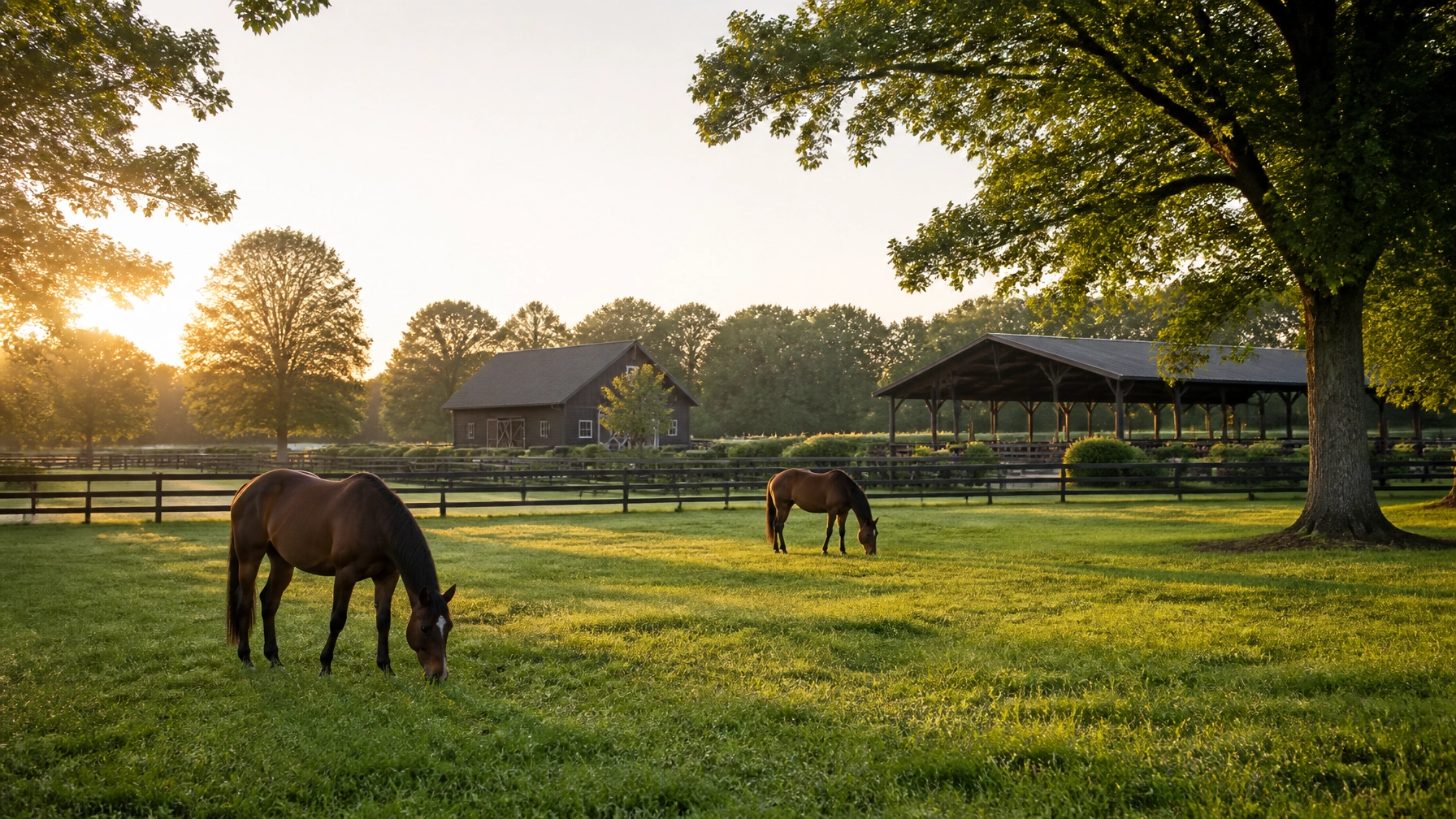
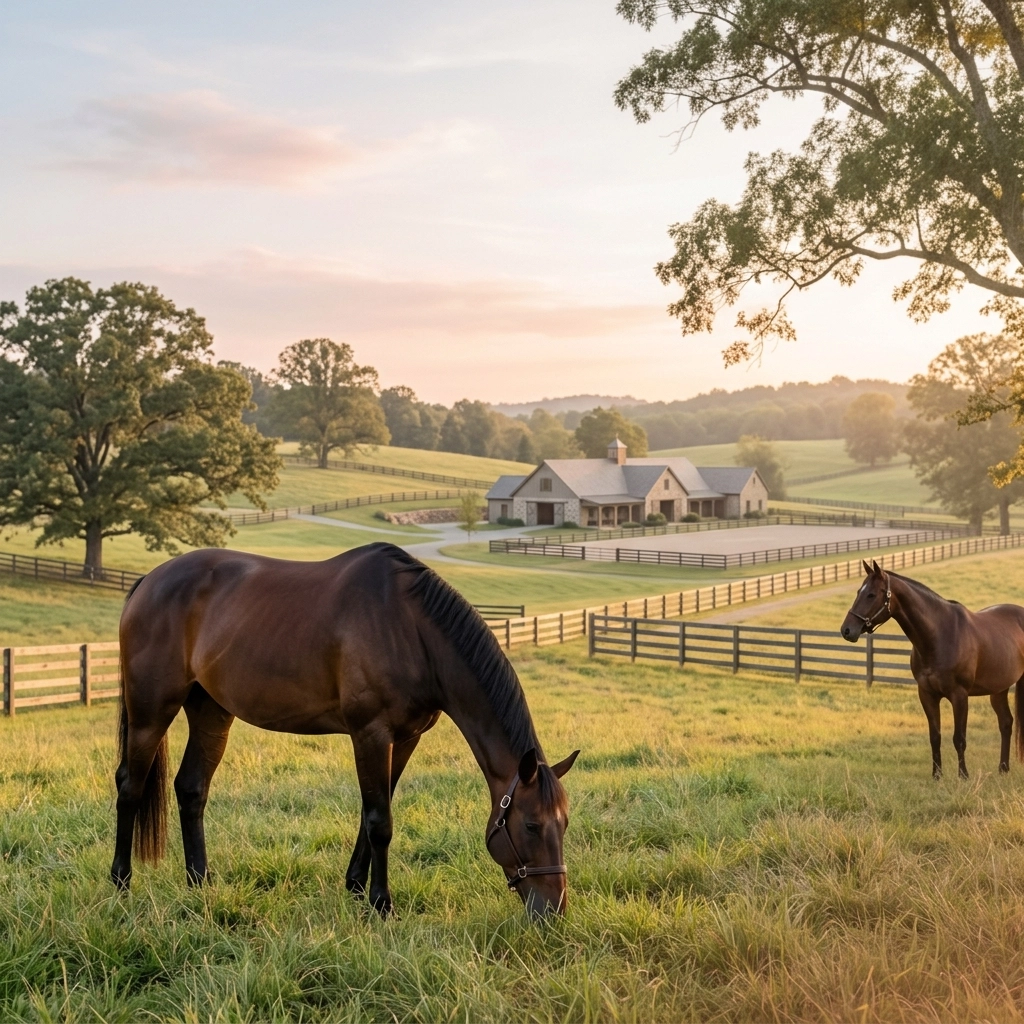
Sustainable grazing follows a simple math: "Take half, leave half." When grass is grazed down to 3–4 inches, move the horses to a fresh paddock. This allows the plant to keep enough leaf surface to photosynthesize and recover quickly. For those managing dressage estates NC, this often means smaller, managed paddocks rather than one massive, overgrazed field.

3. Neglecting the Power of Rotational Grazing
Leaving horses on the same parcel of land year-round is the fastest way to destroy the turf. This leads to "horse sick" pasture: areas of bare dirt (scuffed by hooves) and "roughs" (tall, unpalatable weeds where horses manure).
The Fix: Divide and Conquer
Our team frequently advises clients on the layout of their equestrian communities to include internal fencing for rotation.
- Divide your main pasture into at least three or four smaller cells.
- Rotate horses every 10–14 days depending on the season.
- Mow and harrow the rested paddock to spread manure and encourage even regrowth.
4. Overlooking High-Traffic Soil Compaction
Dressage horses are powerful athletes, and their movement: especially during a celebratory gallop in the rain: exerts tremendous pressure on the soil. Compaction prevents oxygen and water from reaching the roots, essentially "suffocating" the grass.
The Fix: Sacrifice Lots and Heavy Use Areas
A "sacrifice lot" or dry lot is a non-negotiable for a high-end estate. By pulling horses off the grass during wet weather, you protect the rest of your acreage.
- Use Geotextile Fabric: Layering fabric under crushed stone or screenings in gate areas and around waterers prevents the "sinkhole" effect common in NC clay.
- 30 Feet: The minimum recommended distance for a gravel pad around water troughs to ensure stability.
5. Using Inappropriate Fencing for Aesthetics Alone
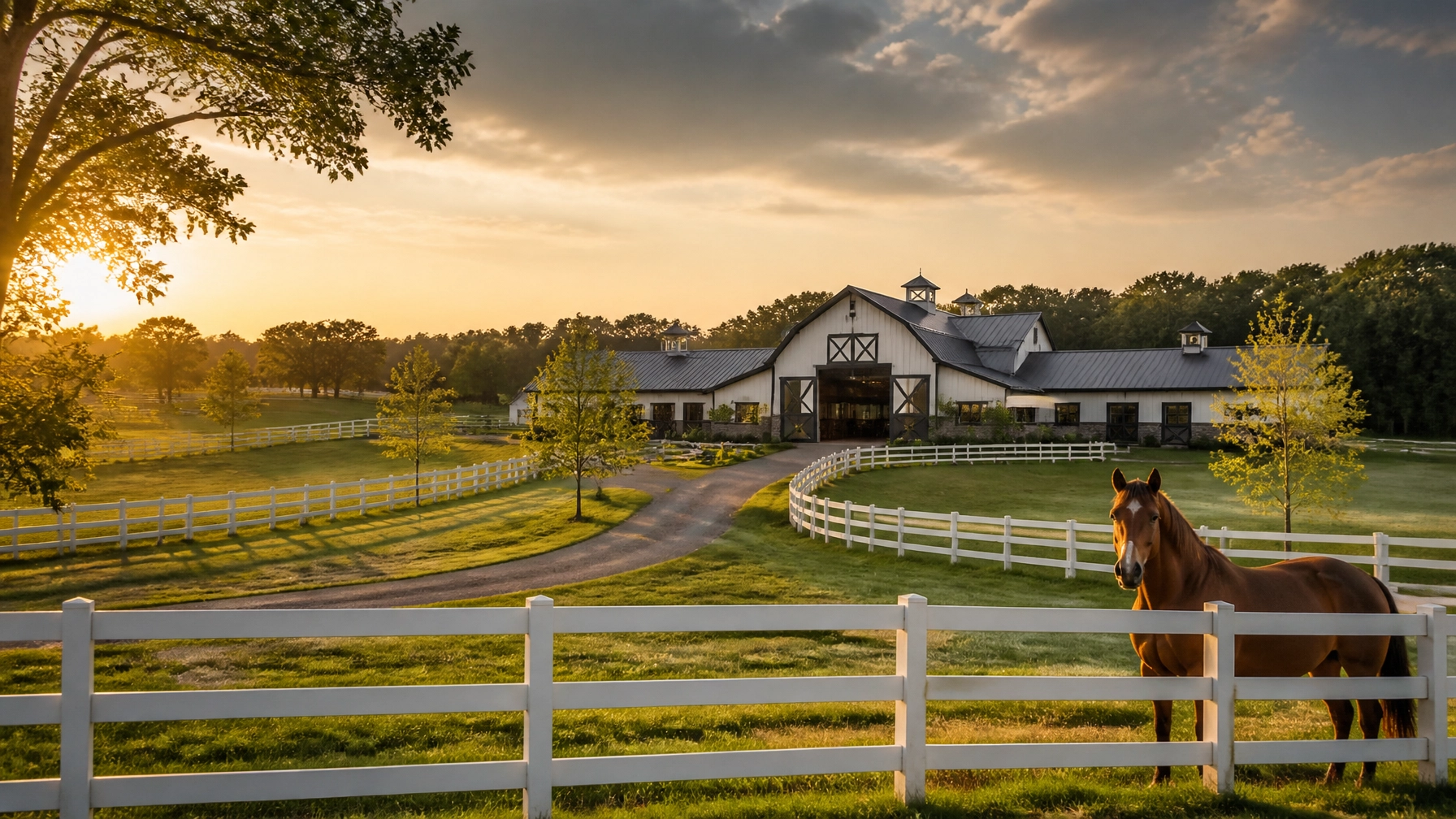
While white board fencing is the hallmark of luxury horse property for sale, relying solely on wood without a hot-wire offset can lead to "cribbing" and leaning, which destroys the fence and the surrounding turf. Worse, using dangerous materials like barbed wire or uncapped T-posts poses a significant risk to expensive equine athletes.
The Fix: Functional Elegance
We recommend a blend of aesthetics and safety.
- Pressure-Treated Wood: Posts should be at least 4 inches in diameter and buried 3 feet deep.
- Safety Caps: If T-posts are used for internal rotations, they must be capped with high-visibility plastic to prevent impalement.
- Electric Offsets: A single strand of electrified polymer-coated wire kept at 2,000–3,000 volts will keep horses off the fence line, preserving your investment.

6. Misidentifying Weeds as Forage
Just because a field is green doesn't mean it’s good. Many dressage estates struggle with buttercup, crabgrass, and Carolina horsenettle. These provide "empty calories" at best and are toxic at worst.
The Fix: Targeted Weed Management
Don't reach for a general herbicide immediately.
- Mowing Height: Keeping your grass at 5–6 inches naturally shades out many weed seeds.
- Identification: Work with a local extension office to identify specific invaders. In the Carolinas, summer weeds often require a different management strategy than winter annuals.
7. Poor Drainage Planning Near the Arena
On many estates, the pasture and the arena are inextricably linked. If the pasture drainage isn't managed, runoff from the fields can undermine the expensive sub-base of your dressage arena.
The Fix: Integrated Water Management
When we assist clients with a horse farm cost calculator, we always include a line item for professional grading.
- Swales and Berms: Use natural land contouring to direct water away from both the arena and the heavy-use areas of the pasture.
- Rain Gardens: Implementing deep-rooted native grasses in low spots can help filter runoff before it leaves your property.
Why Land Management Matters for Your Property Value
Pasture health is a direct reflection of property value. A dressage estate with lush, weed-free, and well-drained paddocks commands a significantly higher price point in the North Carolina market. It signals to a potential buyer that the current owner understands the nuances of equine stewardship.
"Carolina Horse Farm Realty helped us see the potential in a neglected 20-acre parcel in Union County. Their knowledge of soil types and drainage was the difference between us buying a mud pit and building our dream dressage facility." : E. Sterling, Dressage Competitor, Waxhaw, NC
Practical Steps to Take This Season
To move toward a more sustainable grazing model, we suggest following this checklist:
- Soil Test: Contact the NCDA&CS for a soil sample kit.
- Evaluate Fencing: Ensure all perimeters are secure and interior lines allow for rotation. Use our estimate tool to see how improvements impact your farm's value.
- Plan Your Sacrifice Lot: If you don't have one, this should be your next infrastructure project.
Managing a dressage estate requires a balance of passion and practicality. By avoiding these seven common pitfalls, you ensure that your land remains as resilient and impressive as the horses that call it home.
Are you looking to buy or sell a specialized equestrian property?
Our team brings deep knowledge of land use, soil health, and the unique requirements of the dressage community to every transaction. Whether you are searching for your next training base or looking to position your estate for a premium sale, we are here to guide you.
Explore our current listings of horse farms for sale in NC or contact us today to discuss your land management goals.