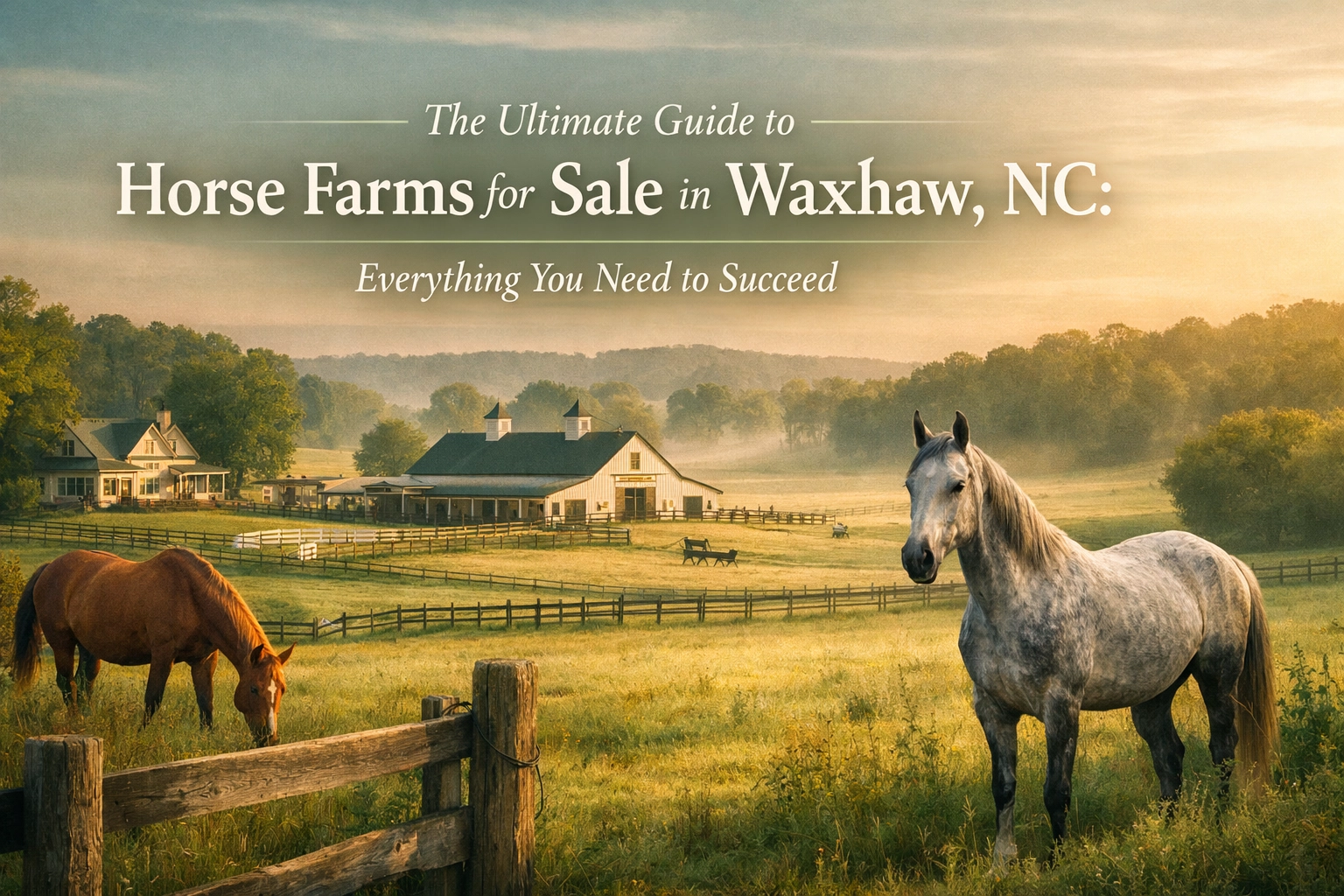
If you're searching for horse farms for sale in the Charlotte Metro area, Waxhaw deserves your serious attention. This Union County town has quietly built a reputation among equestrians who understand that location, land quality, and community matter as much as barn square footage.
Why Waxhaw Works for Serious Equestrians
Waxhaw sits in that ideal zone: far enough from Charlotte's sprawl to secure acreage and privacy, close enough to access world-class veterinary care, feed suppliers, and competition venues within 30 minutes. The soil drains well, the climate supports year-round turnout with proper pasture rotation, and the zoning remains favorable for agricultural use.
The equestrian infrastructure here didn't appear overnight. It developed organically as horse people recognized what the land offered: rolling terrain that's easier on horses' legs than flat clay, established trail systems including Cane Creek Park's 1,100 acres, and a network of boarding facilities, trainers, and farriers who actually return your calls.
The Current Market: What You'll Find
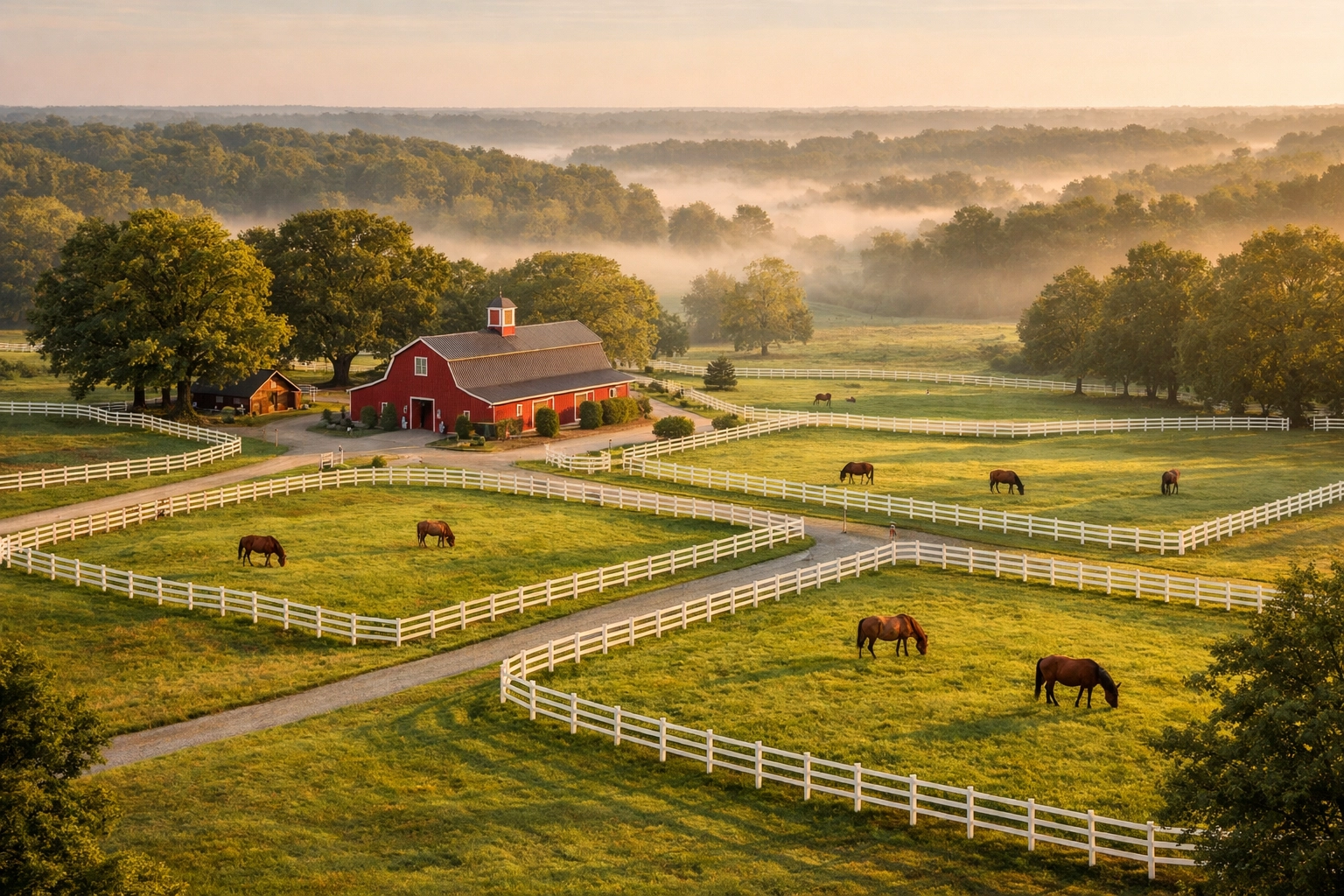
As of early 2026, Waxhaw's equestrian property market shows healthy inventory with options across price points. Current listings range from starter properties around $295,000 to fully developed luxury estates exceeding $1.5 million. The average cost per acre hovers near $50,000, though this varies significantly based on improvements, location within Waxhaw's boundaries, and existing facilities.
You'll find approximately 17-45 properties marketed specifically as equestrian estates, depending on how broadly you define the search parameters. Some are turnkey training facilities with indoor arenas and professional-grade barns. Others are undeveloped acreage waiting for someone with a vision and a competent barn builder.
The sweet spot for many buyers falls between 10-25 acres: enough land for proper pasture rotation, room to build what you need, and manageable enough that you won't spend every weekend on a tractor.
What Defines Quality Horse Property in Waxhaw
The Land Itself
Before you fall in love with a barn, walk the property. How does water move across the terrain after heavy rain? North Carolina gets 43 inches annually, and poor drainage creates mud, eroded pastures, and hoof problems. Quality Waxhaw properties show intentional grading, established drainage patterns, and pastures that recover quickly after weather events.
Look at the soil. Union County's piedmont soils can support good forage with proper management, but some parcels have been mined out by decades of poor practices. If the seller can't show you a recent soil test, that's information in itself.
Consider sun exposure and natural windbreaks. Southern-facing pastures stay warmer in winter but may need more shade infrastructure for summer turnout. Established tree lines provide natural protection from our occasional ice storms and give horses places to shelter during peak sun hours.
Evaluating Existing Facilities
Barns and Stabling
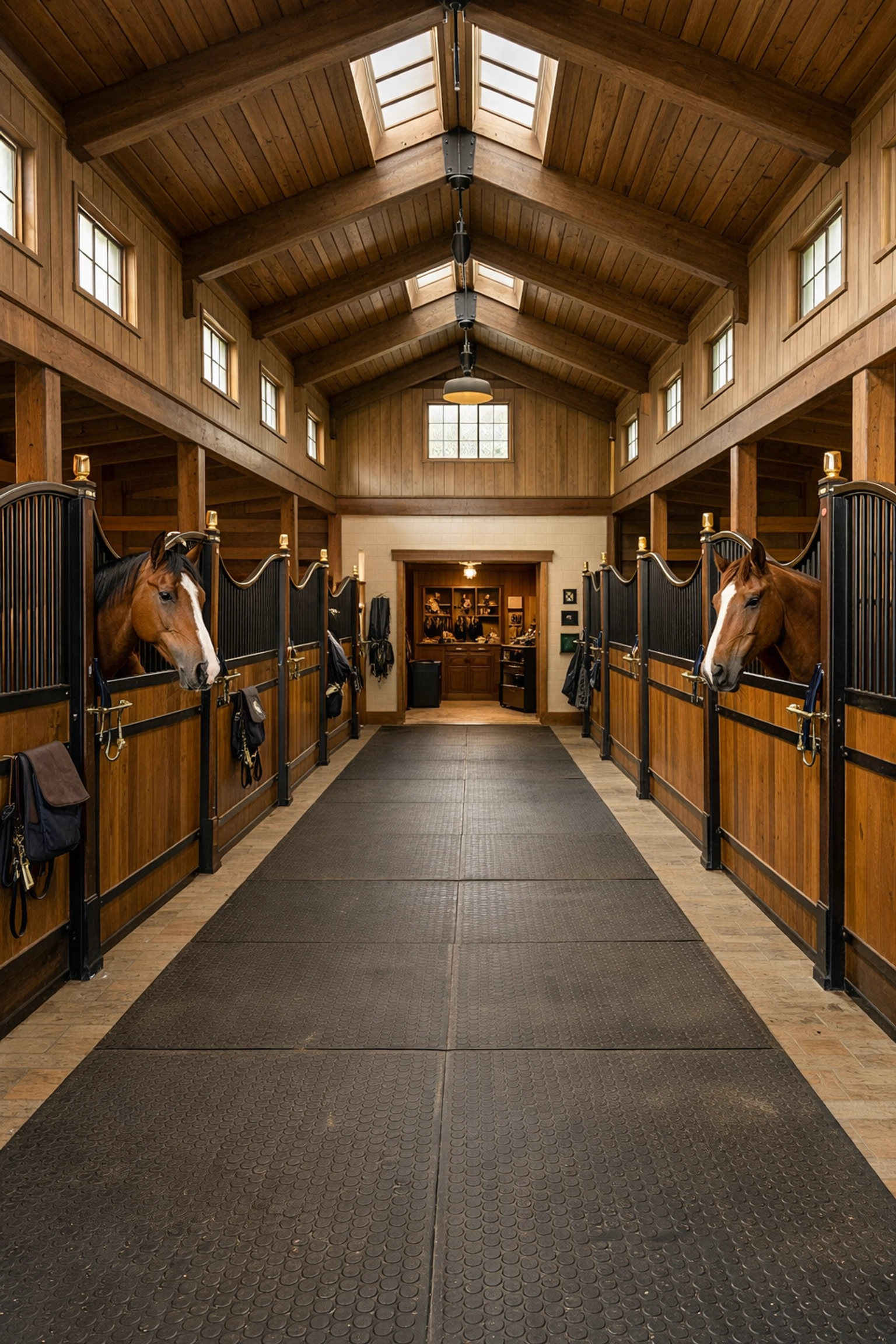
A well-designed barn reflects an owner who understood horses, not someone who copied a picture from Pinterest. Look for:
- Stall dimensions: Minimum 12×12 for average horses, 12×14 or larger for warmbloods, drafts, or mares with foals
- Ventilation without drafts: Ridge vents, cupolas, and window placement that creates airflow without blasting horses directly
- Footing: Concrete aisles with proper slope for drainage, stall mats over well-draining base material
- Electrical: Updated panels, sufficient outlets for winter blanket warmers and fans, exterior lighting for evening chores
- Water systems: Frost-proof hydrants, reliable pressure, easy-to-clean automatic waterers or convenient hose access
Valley Farm properties and similar established communities often feature thoughtfully designed barns because they were built by people who actually lived with the consequences of their design choices.
Arenas and Riding Spaces
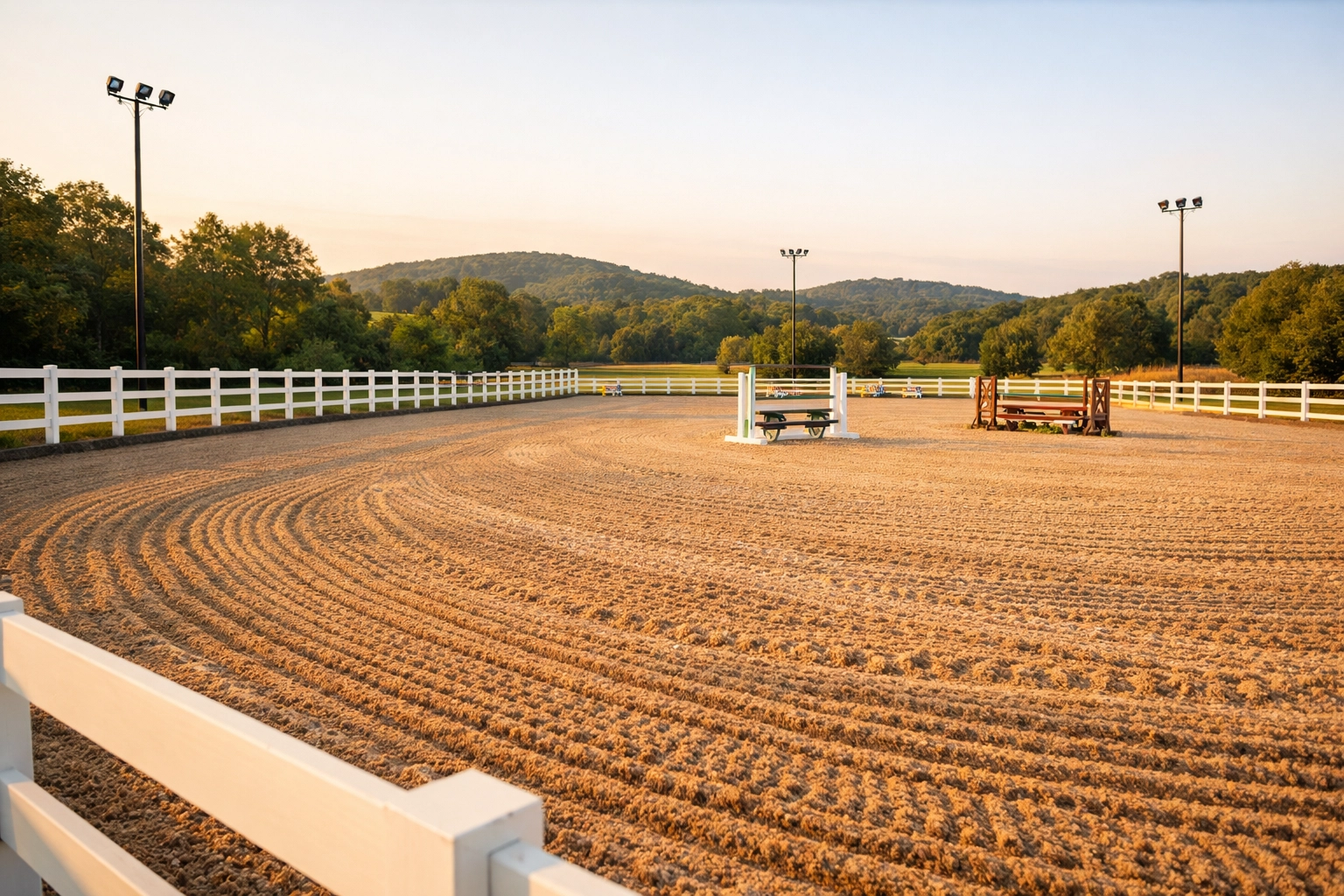
An arena represents significant investment: $15,000 to $100,000+ depending on size, footing, and amenities. Existing quality arenas add real value, but only if they're maintained properly. Check the base: if it's failing, you're looking at complete reconstruction. Quality footing (not just "sand") that's been regularly maintained with proper moisture and dragging patterns tells you the previous owner took their riding seriously.
Lighting, irrigation systems, and proper fencing around riding spaces indicate professional-level commitment to the property's equestrian function.
Infrastructure That Matters
Fencing
Budget $3,000-$8,000 per acre for quality fencing installed. What's already in place? Four-board wood looks beautiful but demands maintenance. Coated wire is safer and more economical but requires proper tensioning. Electric rope works for some horses and fails spectacularly with others.
Check corner posts, gate hardware, and fence line condition. Replacing rotted posts and sagging runs adds up quickly.
Storage and Equipment Buildings
You need somewhere dry for hay (minimum 200 square feet per horse for year's supply), secure space for tack and equipment, and covered parking for tractors and trailers. Properties with existing hay barns, equipment sheds, and organized storage save you $20,000-$50,000 in immediate infrastructure investment.
The Residential Component
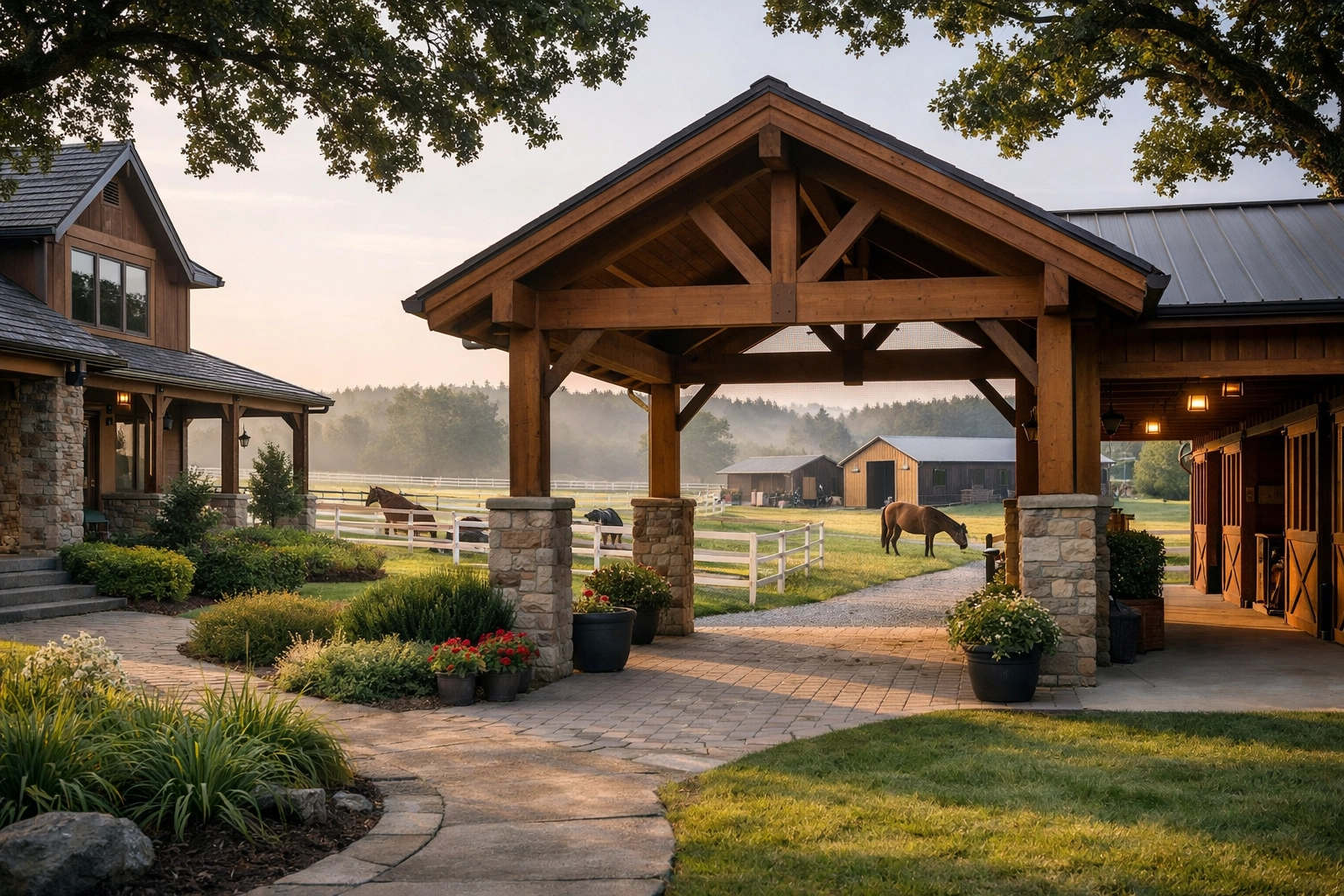
Horse people sometimes focus so intensely on barns and pastures that they forget they'll actually live in the house. Waxhaw horse properties range from modest ranches to custom estates with gourmet kitchens and primary suites overlooking the pastures.
Consider proximity between house and barn. That 200-yard walk seems romantic until you're doing it six times daily in August heat or January ice. Views to the horses, covered walkways, and mudroom space for boots and barn clothes matter more than you think.
Location Within Waxhaw: Micro-Markets Matter
Properties closer to Waxhaw's town center offer easier access to schools, shopping, and restaurants: important if you have non-horse family members. The tradeoff is typically smaller lots and higher per-acre costs.
Moving toward the rural edges provides more acreage options, lower prices, and genuine agricultural neighbors who understand that manure smells and tractors make noise. You'll sacrifice some convenience but gain the space and privacy that serious equestrian operations require.
Proximity to Cane Creek Park and the Mineral Springs Greenway adds value for riders who want trail access beyond their own property lines.
Zoning and Practical Realities
Union County generally maintains favorable agricultural zoning, but regulations vary by specific location. Verify permitted uses, animal limits (some zones restrict commercial boarding operations), and requirements for manure management and property maintenance.
Well-managed horse properties actually appreciate in value, but only if you maintain them as such. Factor ongoing costs: pasture maintenance, manure removal, fence repairs, arena upkeep, and the inevitable equipment purchases. Budget 10-15% of purchase price annually for maintenance and improvements.
Finding Properties Before They Hit the Market
The best horse properties often sell quietly through word-of-mouth within the equestrian community. Working with real estate professionals who specialize in equestrian properties in the Charlotte Metro area provides access to off-market opportunities and pre-listing properties where motivated sellers want to connect directly with qualified horse people.
These specialists understand the difference between a property marketed as "equestrian" because it has a three-sided shed and actual working horse farms with professional infrastructure. That knowledge saves you countless hours viewing unsuitable properties.
Making Your Decision
Buying horse property represents a lifestyle choice as much as a real estate transaction. The right Waxhaw property supports your equestrian goals, fits your management capabilities, and provides room to grow your program over time.
Take time to visit properties during different weather conditions. Watch how water drains, note which pastures stay muddy, and imagine your daily routine across the seasons. Talk to neighbors about well depth, septic capacity, and local service providers.
The best horse properties create a sustainable system where the land supports the horses, the facilities make daily management efficient, and the overall setup allows you to focus on riding rather than constant crisis management.
Carolina Horse Farm Realty specializes in connecting horse people with properties that match their equestrian lifestyle throughout the Charlotte Metro area. Our team understands the land, the facilities, and the practical realities of horse property ownership because we live this life ourselves. Explore current equestrian listings or contact our team to discuss your specific requirements: we're here to help you find property that works as hard as you do.